![The European dairy market is becoming increasingly fragmented. Proteins remain strong, while fats are under pressure [Edition 306 of the Foodcom DAIRY Newsletter]](https://foodcom.pl/wp-content/uploads/2023/08/Foodcom_SA_Whats_up_Dairy_Newsletter-1520x760.jpg "The European dairy market is becoming increasingly fragmented. Proteins remain strong, while fats are under pressure [Edition 306 of the Foodcom DAIRY Newsletter]")
• The European milk market continues to be influenced by high seasonal supply.
• Butter and cream prices are falling due to a surplus of milk fat and weaker demand.
• The protein segment, particularly WPC80 and WPI, maintains strong prices due to limited availability and high demand.
• The cheese and milk powder market is stabilizing, though buyers remain cautious about further price changes.
Welcome, Partners!
Welcome back to our newsletter!
The European dairy market has now firmly entered the second quarter of the year, and the seasonal increase in milk supply continues to influence the dynamics of all major product categories. Although raw material availability remains high both in Europe and globally, price trends are no longer uniform.
Market segmentation is becoming increasingly apparent. The milk fats segment remains under pressure due to high production and ample cream availability, while milk proteins and powders are showing greater resilience thanks to demand signals from global markets and limited supply in key regions.
Market sentiment is becoming increasingly uneven. In some segments, buyers are well-hedged and remain cautious, while in others—particularly in the protein sector—demand continues to rapidly absorb available volumes. It is this imbalance that defines the current stage of the dairy cycle.
Milk powder
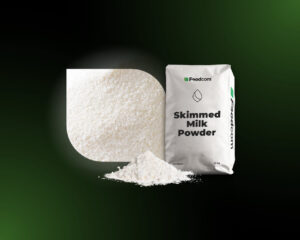
The skim milk powder market has stabilized and is showing stronger trends than in previous weeks. Support comes mainly from the global market, particularly from high prices in the U.S., which improves the competitiveness of European products in export markets.
At the same time, production in Europe remains high. Abundant milk supply and attractive drying margins continue to support production, though there are early signs that the pace of exports may be weaker than at the beginning of the year.
Feed-grade SMP remains strongly correlated with the food segment, and price differences between them are small.
Whole milk powder is currently holding steady in the range of 3,300–3,400 EUR/MT. Opposing price movements for fat and protein are offsetting each other, and stable international demand is helping to absorb growing European production.
Cheese
The cheese market is gradually adjusting to the increased availability of milk, which is translating into higher production in key regions.
Following stronger seasonal demand at the start of the quarter, buying activity has returned to normal. Buyers are less active in the spot market and are more often adopting a wait-and-see approach, especially as price expectations are beginning to fall slightly.
Producers are increasingly offering volumes, which further eases market sentiment. Prices for mozzarella and cheddar are moving in a similar direction—without sharp changes, but with a clear decline compared to the previous quarter.
Fats
The butter market remains under significant pressure, as the supply of milk fat continues to exceed current demand.
High milk production in Europe, the U.S., and New Zealand ensures a steady supply of cream into the system, supporting butter production and putting pressure on prices. Recent results from global auctions have further confirmed this trend, bringing about noticeable adjustments in butter and AMF prices.
In Europe, cream prices around 3,500 EUR/MT significantly reduce production costs, creating additional downside potential for butter prices.
On the demand side, many buyers have already secured the volumes they need and are not currently actively returning to the market. At the same time, sellers are feeling increasing pressure to sell their product, particularly in the spot segment.
Liquids
The liquid products market continues to reflect peak dairy season conditions, with high availability affecting both volatility and overall price pressure.
Cream prices have fallen significantly, reflecting strong supply in Western Europe. This decline is also directly affecting the weaker fundamentals of the butter market.
Skim milk powder has fallen sharply in price, as high supply and shifting processing economics limit price support.
Spot milk remains widely available, and in some regions, volumes continue to exceed processing capacity. Although there are early signs that the production peak may be coming to an end in some regions, the overall balance of the liquid market remains tight.
Whey and proteins
The whey market is currently finding a more stable footing following recent gains. Although short-term demand has weakened after earlier purchases were secured, the overall price level continues to be supported by relatively more expensive liquid whey.
The protein segment remains the strongest part of the entire dairy market.
WPC80 remains very difficult to source, and prices are holding steady at 21,000–22,000 EUR/MT. Demand continues to outstrip available volumes, and forward contracts—particularly for the third quarter—are already being concluded at high price levels.
WPI also remains strong, trading in the range of 25,000–26,000 EUR/MT. Although availability is slightly better than for WPC80, price support persists due to production economics and stable demand.
MPC85 is gaining prominence, with prices approaching 9,000 EUR/MT, as buyers increasingly view it as a partial alternative to whey proteins. This trend is evident, though still limited by the product’s application possibilities.
Wheypermeate is becoming slightly more expensive in Europe due to export demand and its price advantage over other whey products. However, high availability continues to limit stronger price increases.
The lactose market remains stable, with steady demand for standardization. Activity is expected to pick up as market participants prepare for the third quarter.
The global milk market is further increasing challenges for the UK dairy sector. Data from the United States, Australia, and New Zealand show that milk production remains high despite falling prices, leading to oversupply and growing pressure on profitability.
In 2026, global production is growing mainly due to the United States, where an increase of approximately 1.2% is forecast. Australia is rebuilding production after earlier declines, while New Zealand is seeing a slight drop in supply, partly due to herd reductions. Overall, global milk supply continues to exceed demand, which is driving down dairy prices and forcing processors to cut payments to farmers.
Although the pace of production growth is expected to gradually slow, the market remains oversupplied, and high volumes in the U.S. and Oceania continue to put pressure on prices. Combined with the trend of replacing milk fats with vegetable oils, this poses a serious challenge for dairy producers in the UK and Europe.

![Oversupply persists, dairy markets under strong price pressure [290th Edition Foodcom DAIRY Newsletter]](https://foodcom.pl/wp-content/uploads/2024/05/Foodcom_SA_Dairy_Newsletter_1-600x300.jpg "Oversupply persists, dairy markets under strong price pressure [290th Edition Foodcom DAIRY Newsletter]")