- Soybean meal −11%, soybeans −5.5%, oats −16% compared to the end of September; yellow peas are becoming more expensive
- The euro is down 1.5% against the USD and 3.0% against the CAD, leading to higher import costs from North America
- Pea protein under scrutiny: EU tariffs of 40.5–67.1% on China; Chinese tariff relief on Canadian peas expires on December 31
- Oatly, Bunge, and ADM: logistics costs are rising, but there is no shortage of soybeans or soybean meal
At the turn of October and November, the market for plant-based ingredients split clearly. Soybeans, soybean meal, and oats fell in price as record harvests in the United States and high inventories pushed prices down. At the same time, Canadian yellow peas—used to produce pea protein—rose in price because China and India are buying them at a faster pace than a year ago. A weaker euro has raised the cost of purchases from North America, while in the background, tariff decisions are being made that will determine the availability of peas in the first quarter of 2027.
Market Overview
Soybeans and soybean meal fell in price throughout October. Record U.S. harvests outweighed China’s resumed purchases, and December soybean meal fell on November 3 to $318 per short ton, the lowest level in two and a half months. Oats gave up their September gains and fell by about 16% over the month. Canadian yellow peas moved in the opposite direction and rose in price, as exports to China and India are clearly outpacing last year’s levels. However, the weaker euro has raised the cost of North American soybeans and legumes, so cheaper raw materials do not automatically translate into lower prices for buyers in Europe.
Factors Affecting Prices
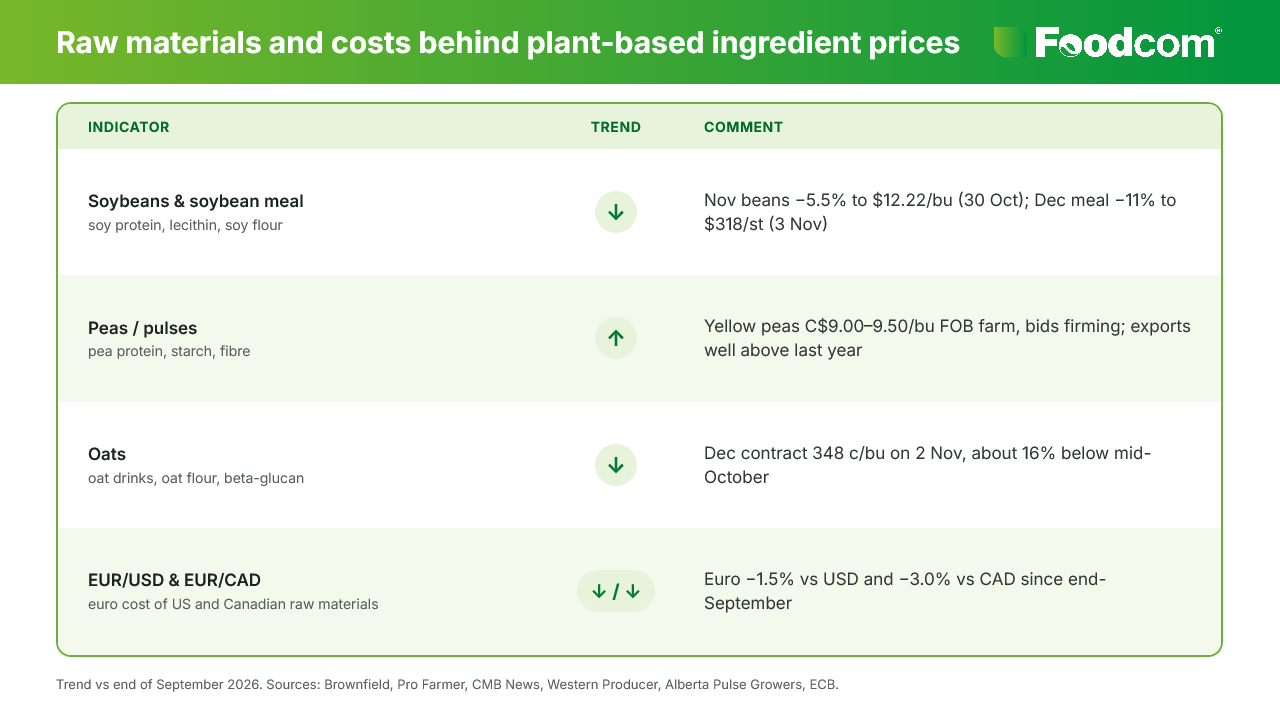
The soybean market saw the most activity. The November contract on the Chicago Board of Trade closed on October 30 at $12.22 per bushel, down 5.5% from the end of September, and December soybean meal fell on November 3 to $318 per short ton, a drop of 11% over the same period. The USDA’s October report estimated the U.S. soybean crop at a record 4.56 billion bushels, while in Brazil, 53% of the planting area had already been sown by the end of October. China has resumed purchases of U.S. soybeans, but U.S. soybeans are still subject to tariffs totaling about 13%, while Brazilian soybeans face only a 3% tariff, so Chinese demand is unable to absorb the surplus.
Oats fell sharply in price following September’s gains, which were driven by concerns about the harvest in Canada. On November 2, the December contract was trading at 348 cents per bushel, about 16% lower than in mid-October, and large carryover stocks from the 2025/26 season are holding back a rebound. Yellow peas in Canada were trading at 9.00–9.50 CAD per bushel FOB farm in early November, and offers continue to rise. Since the end of September, the euro has weakened by 1.5% against the U.S. dollar (to 1.1179) and by 3.0% against the Canadian dollar (to 1.5623).
Product in the Spotlight: Pea Protein
Several factors are currently affecting the pea protein market simultaneously. Since late September, definitive EU anti-dumping duties ranging from 40.5% to 67.1% have been in effect for five years on Chinese pea protein, which should redirect European demand toward producers in the EU, Canada, and the U.S. At the same time, Canadian peas are increasingly finding their way elsewhere: China and India are buying them at a significantly faster pace than a year ago, and China’s suspension of additional tariffs on Canadian peas expires on December 31. In Europe, Meala has more than tripled production of its texturizing pea protein at its plants in France and Germany. Higher yellow pea prices and a weaker euro are likely to affect protein pricing, so it’s worth taking this into account when negotiating contracts for 2027.
Industry News
- Canadian ministers are in China negotiating an extension of the tariff exemption on peas. The Canadian Minister of Trade is visiting Beijing and Shanghai from November 3–6, accompanied by the Minister of Agriculture. China’s suspension of additional tariffs on Canadian peas and canola meal expires on December 31. If extended, yellow peas will continue to flow into China, and European pea protein processors may face a shortage of raw materials starting in January.
- Oatly is lowering its 2026 profit forecast due to freight and fuel costs. The company now expects adjusted EBITDA of $16–20 million instead of $25–35 million, even though revenue rose by 9.1%. Oat-based beverages are becoming more expensive due to energy and logistics costs, not because of oats, and suppliers may try to pass these costs on to customers in the form of surcharges.
- Bunge and ADM confirm that there is no shortage of soybeans. Bunge has lowered its forecast for soybean processing, while ADM has raised its forecast because profits from processing have increased thanks to U.S. biofuel policy. Soybeans are primarily processed into oil, so soybean meal and raw materials for soy protein will likely remain plentiful.
What to Watch For
- The decision by Canada and China regarding the extension of the suspension of tariffs on peas and rapeseed meal, which expires on December 31.
- The pace of soybean imports into the EU, which as of October 18 was 3% lower than a year earlier, and the progress of planting in Brazil.
- The European Parliament’s Agriculture Committee vote on the reform of the Common Agricultural Market, expected on December 1, which will include amendments expanding the ban on the use of “meat” terms for plant-based products.
Contact
Are you planning to purchase pea protein, soy, or oat ingredients for early 2027? Contact the Foodcom S.A. team .