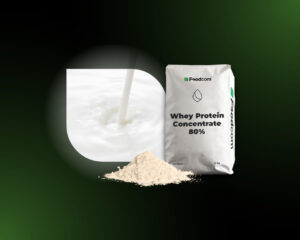

- Whey protein concentrates (WPC) are a valuable source of dietary protein.
- They are characterized by a protein content of 30 to 90%, and contain a high amount of essential amino acids and other nutrients.
- WPCs are produced from whey formed during cheese production.
- Protein concentrates are used in the food, pharmaceutical and feed industries, as well as in the production of supplements and nutrition for athletes or people with special dietary needs.
Whey protein concentrates (WPC) are a popular and highly regarded source of protein that is widely used in both the food industry and the production of dietary supplements. Thanks to its properties, WPC has gained recognition among athletes, health-conscious individuals, and food manufacturers. In this article, we’ll take a closer look at what whey protein concentrate actually is, the different types available, the production process, and its various applications.
What is whey protein concentrate?
Whey protein concentrate is derived from whey, a byproduct of cheese production. Whey contains a variety of nutrients, including high amounts of protein. Whey protein concentrates are characterized by a high content of this particular nutrient, and their popularity stems from how easily the body absorbs them and the high biological value of this protein.
Concentrates containing between 30% and 90% protein are available on the market, allowing the product to be tailored to different consumer needs. The protein in WPC contains a large amount of essential amino acids, such as BCAAs, which are particularly valuable to the human body. In addition to protein, the concentrates also contain fats and lactose, which give the product an appealing flavor, as well as possible flavor and aroma additives.

Types of Whey Protein Concentrates and Their Characteristics
WPCs differ primarily in their protein content on a dry-matter basis, which directly affects their technological properties, flavor, and range of applications. Depending on the degree of purification and protein concentration, WPCs are divided into several basic categories. The most important ones are presented below.
WPC 30–35% – a basic concentrate with a wide range of industrial applications
Whey protein concentrate 35% is one of the least processed forms of WPC. In addition to protein, it contains higher amounts of lactose, milk fat, and other components naturally found in whey. Due to its composition, it is primarily used in:
- the food industry as a functional ingredient,
- the production of baked goods,
- processed foods with a lower protein content,
- the feed sector and animal feed.
Its main advantages are its low price and good processing properties, particularly in products where protein is not the dominant ingredient.
WPC 60% – a balance between quality and functionality
Concentrates with a protein content of approximately 60% represent an intermediate solution between basic and high-protein products. WPC 60% is primarily used in:
- dairy beverages and desserts
- protein bars and snacks,
- dietary supplements with moderate protein content.
They offer a better nutritional profile than lower-concentration fractions while retaining beneficial technological properties, such as good solubility and stability in liquid products.
WPC 75% and WPC 80% – the most popular forms on the market
Concentrates with 75% and 80% protein content are the most significant on the market, as they are most commonly used in the dietary supplement and functional food segments. Their popularity stems from a good balance between high protein content, an affordable price, and good sensory properties (taste, solubility). The 80% whey protein concentrate is particularly valued in:
- protein supplements for athletes,
- products that support recovery,
- high-protein diets.
It serves as an easily accessible source of amino acids, supporting the processes of rebuilding and maintaining muscle mass.
WPC 90% – the most advanced form of concentrate
A concentrate containing approximately 90% protein is the most purified form of WPC, with parameters similar to those of an isolate. It is characterized by: a very high protein content, low fat and lactose content, better solubility, and microbiological purity. It is used primarily in:
- specialty dietary supplements,
- premium-class functional foods,
- products with high quality standards.
Due to its characteristics, it is used in applications where maximum protein concentration is essential while minimizing additional ingredients.
WPI and WPH – Alternative Forms of Whey Proteins
In addition to classic WPC concentrates, there are other forms of whey protein that differ in their degree of processing and functional properties. WPI (whey protein isolate) is a form with even higher purity than WPC. It typically contains over 90% protein and is characterized by very low fat and lactose content. It is used in premium products and specialized diets. WPH (whey protein hydrolysate), on the other hand, is a form that has been pre-digested enzymatically, which allows the protein to be absorbed more quickly. It is used in advanced sports supplements and medical products.
What does WPC production look like?
The production of whey protein concentrates is a complex process involving several stages. The first step is obtaining whey, which is produced by separating the cheese curd from the liquid portion of milk during cheese production. The whey is then filtered and subjected to ultrafiltration, which separates the proteins from other whey components, such as fats and carbohydrates.
During ultrafiltration, the whey proteins are concentrated, while unwanted components are removed. The concentrated whey is then spray-dried to produce a powdered whey protein concentrate. Depending on the degree of filtration and further processing, concentrates with varying protein contents can be obtained.
WPC is produced on an industrial scale at facilities operated by companies specializing in the processing of milk and dairy products, while product distribution is handled by various companies throughout the country. One of the most reliable partners is Foodcom S.A., which supplies whey protein concentrates with varying protein contents.

Applications of Whey Protein Concentrates
Whey protein concentrates are widely used in various industries, and their popularity continues to grow. Here are the most important areas in which they are used.
Food industry
WPC with lower protein content (e.g., WPC 30% or WPC 60%) is used as an ingredient in various food products, such as yogurts, cheeses, baked goods, protein bars, and milk drinks. These concentrates enhance the nutritional value of products and improve their texture and taste. WPC is an excellent and cost-effective substitute for skim milk powder.
Pharmaceuticals and Functional Foods
WPC is also used in the production of functional foods—products that, in addition to their nutritional value, have a beneficial effect on consumers’ health, including supporting the maintenance of muscle mass, healthy teeth, and strong bones. Examples include high-protein beverages and desserts. Due to its nutritional properties and ease of absorption, WPC is also used in medical preparations and dietary products for patients who require additional sources of protein, such as during convalescence or for elderly patients.
Dietary supplements for athletes
WPC 80% and WPC 90% concentrates are widely used in dietary supplements designed for athletes and physically active individuals. Thanks to their high protein content and rapid absorption, these concentrates support muscle building and recovery after intense exercise. Particular importance is placed on their content of branched-chain amino acids, primarily leucine, which plays a role in the formation of muscle proteins.
Animal Feed
WPC with a lower protein content, such as WPC 30%, is also used in the production of animal feed. The addition of whey protein to feed helps provide animals with essential amino acids, supporting their health and development.

The Versatility of WPC in the Modern Food Industry
Whey protein concentrates are versatile products with a wide range of applications that are in high demand among both food manufacturers and individual consumers. Depending on its protein content, WPC can serve a variety of functions – from enriching the nutritional value of food products to supporting the health and recovery of athletes.