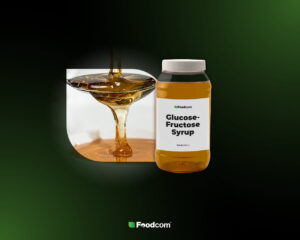
- Glucose-fructose syrup (isoglucose, known in the USA as HFCS) is a liquid sweetener made from maize or wheat starch by hydrolysis followed by enzymatic isomerisation of part of the glucose into fructose.
- It most commonly contains 42% or 55% fructose on a dry solids basis; when there is more fructose than glucose, it is called fructose-glucose syrup in the EU.
- It is not the same as glucose syrup – glucose syrup contains no fructose, is less sweet and is used mainly to control crystallisation and texture.
- It is about as sweet as sugar, does not crystallise, retains moisture and lowers the freezing point, which is why it is used in soft drinks, ice cream, baked goods, jams and confectionery.
- It is no more harmful than sugar, but, just like sugar, consumed in excess it contributes to obesity and metabolic diseases.
In short: glucose-fructose syrup is a thick, colourless syrup containing free glucose and fructose. It is made from starch: the starch is first broken down enzymatically into glucose syrup, and then the enzyme glucose isomerase converts part of the glucose into fructose. The most popular grades contain 42% or 55% fructose and are almost as sweet as sugar. Manufacturers value it for its liquid form, resistance to crystallisation, ability to retain moisture and lower cost. In terms of composition and effects on the body it is very similar to sucrose, which is why dietary guidelines treat it in the same way as sugar – as an added sugar that is best kept to a minimum.
What is glucose-fructose syrup?
Glucose-fructose syrup is a liquid sweetener produced from starch that contains free glucose and free fructose, small amounts of other sugars and around 20–30% water. In Europe the raw material is usually maize starch or wheat starch, while in the United States it is almost exclusively maize (corn). EU legislation refers to this product as isoglucose, and in the USA it is known as HFCS (high fructose corn syrup).
Depending on the ratio of sugars, two names are used in the EU: glucose-fructose syrup, when glucose predominates (most often around 42% fructose on a dry solids basis), and fructose-glucose syrup, when there is more fructose than glucose (e.g. 55%). They correspond to the American designations HFCS-42 and HFCS-55.
The names can be confusing. In American usage, corn syrup simply means glucose syrup made from maize, which contains no fructose – so it is not the same as HFCS. Nor is glucose-fructose syrup the same as pure fructose or a syrup made from fruit.
How is glucose-fructose syrup made?
Glucose-fructose syrup is produced in a multi-stage enzymatic process. The technology was developed in Japan and the USA in the 1960s and 1970s, and its key element is the enzyme glucose isomerase, which converts part of the glucose into fructose.
- liquefaction – a starch slurry is heated with the enzyme alpha-amylase, which cleaves the long starch chains into shorter dextrins,
- saccharification – the enzyme glucoamylase breaks the dextrins down into glucose, giving a glucose syrup with a very high glucose content,
- refining – filtration, activated carbon and ion exchange remove proteins, colour compounds and salts,
- isomerisation – the syrup flows through columns packed with immobilised glucose isomerase; part of the glucose is converted into fructose, and the reaction is stopped at around 42% fructose on a dry solids basis – slightly below equilibrium (around 50%), because pushing it further would take too long and is not cost-effective,
- enrichment (for grades with a higher fructose content) – chromatographic separation yields a fraction containing around 90% fructose, which is blended with the 42% syrup to obtain, for example, 55% fructose,
- evaporation – water is evaporated to around 71% (HFCS-42) or around 77% (HFCS-55) dry solids.
Liquefaction is shared with the production of maltodextrin, which is obtained at this stage, while liquefaction and saccharification are shared with the production of glucose syrup and dextrose. These products differ in the degree of starch hydrolysis and in subsequent processing.
What is the difference between glucose syrup and glucose-fructose syrup?
Glucose syrup is obtained solely by hydrolysing starch and contains no fructose, whereas glucose-fructose syrup additionally undergoes isomerisation. They are two different products with different applications.
| Property | Glucose syrup | Glucose-fructose syrup (42%) | Fructose-glucose syrup (55%) | Sugar (sucrose) |
|---|---|---|---|---|
| Sugar profile | glucose, maltose, oligosaccharides, no fructose | approx. 42% fructose, approx. 53% glucose, the rest oligosaccharides | approx. 55% fructose, approx. 41% glucose | disaccharide: glucose and fructose 1:1 in a single molecule |
| Sweetness (sugar = 100) | approx. 30–70, depending on the degree of hydrolysis | approx. 90–100 | approx. 100 | 100 |
| Form, dry solids | thick syrup, approx. 80%; also available as a powder | syrup, approx. 71% | syrup, approx. 77% | crystals, approx. 100% |
| Main applications | sweets, jelly sweets, ice cream, control of crystallisation and viscosity | baked goods, dairy products, canned foods, jams | soft drinks | all-purpose |
Glucose syrups are characterised by their DE (dextrose equivalent), which indicates how extensively the starch has been hydrolysed. The higher the DE, the sweeter and less viscous the syrup. Glucose syrup is also available in dried form, as glucose syrup powder. You can read more about glucose itself in our article on glucose.
How is glucose-fructose syrup different from sugar?
In terms of composition, glucose-fructose syrup is very similar to ordinary sugar, i.e. sucrose, but it differs in form and technological properties. Sucrose is a disaccharide in which glucose and fructose are joined by a chemical bond in a 1:1 ratio. In the syrup, both sugars are present as free molecules, in a ratio close to that of sucrose (42:53 or 55:41). In the body, sucrose is rapidly broken down into glucose and fructose anyway, and in acidic soft drinks it is partly hydrolysed during storage.
The key differences for manufacturers:
- form – the syrup is liquid, needs no dissolving and is easy to pump and dose,
- crystallisation – under normal conditions glucose-fructose syrup does not crystallise, whereas sugar may crystallise in the finished product,
- moisture retention – free fructose binds water strongly, so baked goods stay soft for longer,
- Maillard reaction – glucose and fructose are reducing sugars, so they brown faster during baking,
- energy value – on a dry solids basis it is the same as sugar (approx. 4 kcal/g), but because the syrup contains water, 100 g of syrup provides approx. 280–310 kcal,
- cost – depends on the prices of maize, wheat and sugar; in the USA the syrup is usually cheaper, while in the EU the difference is smaller.
What are the properties of glucose-fructose syrup?
Glucose-fructose syrup is more than just a source of sweetness. In formulations it performs several technological functions at once:
- sweetening – a clean, sweet taste with no aftertaste that enhances fruit flavours well,
- moisture retention – extends the freshness of cakes, biscuits and bars,
- lowering water activity – limits microbial growth in jams, fillings and candied fruit,
- freezing point depression – ice cream stays soft and is easier to scoop,
- crystallisation control – prevents sugar from crystallising in confectionery, icings and jams,
- colour and flavour – promotes browning of the crust of bread and baked goods,
- fermentation – glucose and fructose are readily available to yeast, which speeds up dough fermentation,
- solubility – mixes easily with water and other liquid ingredients.
What is glucose-fructose syrup used for?
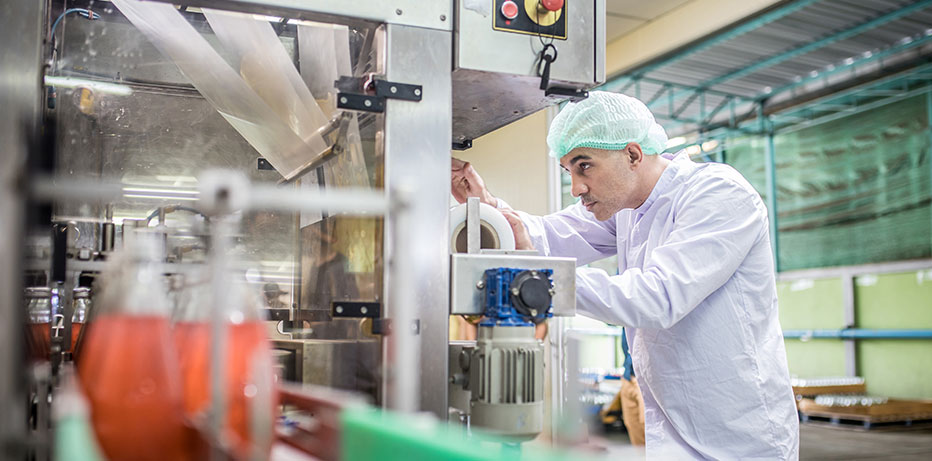
Glucose-fructose syrup is used mainly in the food industry, wherever a liquid sweetener with properties similar to sugar is needed.
- soft drinks – the most important application in the USA, usually as 55% syrup; in Europe soft drinks are more often sweetened with sugar,
- dairy products – fruit yoghurts, milk drinks, desserts,
- ice cream and frozen desserts – sweetness and a soft texture,
- bakery and confectionery – cakes, biscuits, sandwich bread, cereal bars, fillings,
- fruit preparations – jams, preserves, fruit in syrup, fruit fillings,
- sauces and dressings – ketchups, barbecue sauces, marinades,
- breakfast cereals and snacks – as a component of coatings and as a binder,
- other industries – pharmaceutical syrups and nutrient media for fermentation processes.
In the European Union, isoglucose production was restricted for years by quotas, which were abolished in 2017. Even so, its share of the EU sweetener market remains much smaller than in the USA, where high fructose corn syrup is one of the main sweeteners. Other types of sweeteners, including non-caloric ones, are compared in our article on artificial sweeteners.
Is glucose-fructose syrup bad for you?
Glucose-fructose syrup is no more harmful than ordinary sugar – but no less harmful either. Studies comparing the two sweeteners in equal amounts show similar effects on body weight, blood glucose, insulin and blood lipids. This is hardly surprising, as both supply glucose and fructose in similar proportions.
The real problem is excessive intake of added sugars, whatever their form. Large amounts of fructose, which is metabolised mainly in the liver, promote fat accumulation and raise levels of triglycerides and uric acid. Too much sugar in the diet increases the risk of obesity, type 2 diabetes, non-alcoholic fatty liver disease and tooth decay. That is why:
- WHO recommends that free sugars – including syrups, honey and fruit juices – should provide less than 10% of total energy intake, and ideally less than 5%,
- EFSA, in its 2022 opinion, advised that intake of added and free sugars should be as low as possible in the context of a nutritionally adequate diet,
- people with fructose intolerance – those with hereditary fructose intolerance must avoid both the syrup and sucrose, while people with fructose malabsorption usually limit products containing glucose-fructose syrup,
- sugar-sweetened drinks are a particularly significant source of sugars, because it is easy to drink a lot of them without feeling full.
Glucose-fructose syrup gained its bad reputation mainly in the USA, where its consumption rose sharply alongside the obesity epidemic. However, current evidence indicates that the culprit is the total amount of sugar in the diet rather than any particular type of sweetener. What matters most for health, therefore, is how much added sugar we eat, not the form in which it gets into the product.
How is glucose-fructose syrup labelled?
Glucose-fructose syrup is not a food additive and has no E number – it is an ingredient, declared in the ingredients list as “glucose-fructose syrup” or “fructose-glucose syrup”, depending on which sugar predominates. In the nutrition declaration it is counted under “sugars”. Several rules matter to manufacturers:
- nutrition claims – a product containing added syrup must not carry a “no added sugars” claim,
- gluten – wheat-based glucose syrups and dextrose are exempt from allergen labelling, because the production process removes gluten proteins,
- GMOs – syrup made from genetically modified maize must be labelled as such in the EU; syrups produced in Europe are usually made from non-GM maize or from wheat,
- raw material origin – the name does not have to indicate whether the syrup was made from maize or wheat.
How to choose glucose-fructose syrup for production and where to buy it?
When buying syrup for a production plant, it is worth comparing the following in the specification:
- fructose content – 42% or 55% on a dry solids basis, depending on the required sweetness and application,
- dry solids – approx. 71% or 77%; this affects viscosity, dosing and microbiological stability,
- carbohydrate profile – the proportions of glucose, fructose and higher sugars,
- colour and purity – ICUMSA colour, ash, conductivity, pH,
- microbiological parameters – yeasts, moulds, total viable count,
- raw material and documentation – maize or wheat, non-GMO status, quality certificates, halal or kosher certification.
The syrup is most often delivered in road tankers, IBC containers or drums. It is stored in clean, closed tanks, usually at around 25–35°C, depending on the type of syrup. Too low a temperature increases viscosity and makes pumping difficult, while too high a temperature accelerates darkening. Shelf life is typically several months.
Foodcom S.A. supplies glucose-fructose syrup, as well as glucose syrup powder, glucose, dextrose and fructose to food and beverage manufacturers, together with specifications and quality documentation. For availability, specifications and prices, please contact our sales team.