![Monthly Agro Commodities Market Overview [August 2025]](https://foodcom.pl/wp-content/uploads/2025/12/Agro-listopad-min-1520x760.png "Monthly Agro Commodities Market Overview [August 2025]")
- The end of 2025 was dominated by oversupply in dairy and grains, which limited the upside potential for prices and forced a cautious, short-term purchasing strategy.
- The premium segments, whey proteins and cocoa, remained expensive and highly volatile, reacting strongly to any news about supply, demand, and weather factors.
- Markets entered 2026 with low liquidity and selective hedging of volumes, with continued uncertainty on the demand, cost, and regulatory sides.
The end of 2025 in global agricultural commodity markets was marked by clear differences between the various market segments. Those under strong supply pressure, such as cereals and some dairy products, were characterised by limited upside potential and cautious buying activity. At the same time, markets with structurally tight supply or premium demand, in particular whey proteins and cocoa, remained highly sensitive to incoming information, which translated into elevated price volatility. The end of the year was also marked by low trading liquidity, position closures and a selective approach to hedging volumes for the start of 2026.
Dairy products
December brought a continuation of price pressure in the European dairy sector, particularly in the fats and powders segments. Comfortable raw material availability, combined with limited purchasing activity over the festive period, supported further downward price movements. In market terms, butter and skimmed milk powder remained under pressure, with deals mainly concluded in the short term, often at a clear discount to earlier contracts.
Butter in Europe stabilised at lower levels in December, with producers focusing on reducing stocks before the end of the year. The powder segment remained quiet, with SMP remaining at relatively stable but low levels, while WMP continued to suffer from weak demand from the chocolate and confectionery industries, further burdened by the high availability of milk fat.
Cheeses, which benefited from seasonal retail demand and moderate export activity, fared relatively better. Gouda and mozzarella remained stable, but inventory pressure and international competition limited the potential for price increases. Cheddar and long-ripened cheeses remained more sensitive to price adjustments, especially in the context of high stocks.
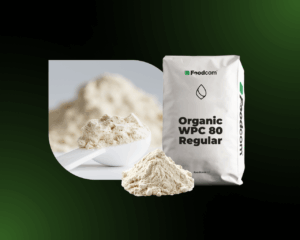
Whey proteins remained the clear exception. WPC 80 and WPI continued to benefit from strong demand from the functional food, supplement and sports nutrition segments. Limited supply and long lead times kept prices at very high levels, stabilising margins in this part of processors’ portfolios.
December confirmed the maintenance of the dairy market in a phase of clear supply advantage in traditional categories, while maintaining premium status for whey proteins. Entering 2026, there is a high degree of purchasing caution and a focus on short-term volume hedging.
Cereals and starches
The cereals market in December 2025 was heavily influenced by global oversupply and very high stocks. Following the record harvest in the 2025/26 season, supply pressures effectively limited the upside potential of prices and the market focused on export competition, especially between the European Union and the Black Sea countries.
In Europe, high levels of wheat and maize stocks, coupled with moderate export rates, resulted in a significant proportion of grain being diverted to the feed processing and bioenergy sectors. The aggressive pricing policy of Russian and Ukrainian exporters continued to limit the competitiveness of EU offers in third markets, which translated into margin pressure on the part of European traders.
In the maize market, the situation remained particularly difficult in central and eastern Europe. Poland, Romania and Hungary ended the year with large stocks, and stable but insufficient feed demand was unable to absorb the available volumes. Good availability of raw material reduced the cost of starch and bioethanol production, but strong competition between processors limited the possibility of improving end-product prices.
High stocks and strong export competition remain key factors shaping the market in early 2026, and any price rebound will require a clear demand stimulus or supply-side disruption.
Coffee and cocoa
Coffee market
December in the coffee market was a continuation of the heightened volatility seen at the end of November. The market continued to react to earlier trade and currency impulses, including changes in US trade policy towards Brazil. Despite price corrections, coffee quotations remained high by historical standards and investors were quick to return to the narrative of low stocks and market vulnerability to weather factors.
The depreciation of the Brazilian real and persistently high exports from Vietnam continued to increase supply pressures in the short term, but structural tensions on the supply side limited the scale of sustained declines. The market entered 2026 with a clear focus on further volatility.
Cocoa market
In the cocoa market, December was marked by persistent nervousness following the record price levels of the previous months. Forecasts indicating an improved West African harvest and the possibility of a small surplus in 2024/25 eased sentiment, but prices remained many times higher than previous years’ averages.
At the same time, signs of weakening processing demand, particularly in Europe and Asia, became increasingly evident. The decline in cocoa throughput confirmed that high prices were beginning to have a real impact on industry purchasing decisions, although the market remained highly sensitive to all weather and logistical risks.
Additives
December 2025 in the functional and feed additives market was characterised by a seasonal calming of trading activity and extended delivery times. European importers focused on closing contracts and securing key positions for early 2026, reducing spot purchases.
The strongest structural trend was in natural additives, particularly phytogenic components. Increasing regulatory pressure and the need to reduce the use of antibiotics supported further growth in demand for essential oils and herbal blends, especially in animal nutrition.
Prices for basic chemical additives remained stable or slightly declined. For pH adjusters and citric acid, price levels in Europe were in the range of around €1.42-1.51/kg in December, reflecting good availability of the commodity from Asia and moderate end-of-year demand. However, producers signalled that rising energy costs could affect margins in the coming months.
Summary and forecasts
December 2025 confirmed the widening gaps between the different segments of the agricultural commodity market. Dairy and cereals remained heavily influenced by supply, while whey protein and cocoa maintained their status as premium markets with increased volatility. Coffee entered the new year with a high degree of sensitivity to weather, currency and political factors, while the additives market remained stable, albeit heavily influenced by operational and regulatory factors.
Outlook for early 2026:
- in dairy, further adjustments in fat prices are possible while raw material supply remains high;
- in the cereal market, supply pressures should persist and any rebound will depend on exports and the new season;
- coffee and cocoa markets will remain volatile, reacting to weather, stock levels and demand data;
- in natural additives, demand is expected to continue to increase, with stable prices in the primary segments.

![Monthly overview of the agricultural commodities market [August]](https://foodcom.pl/wp-content/uploads/2025/09/monthly-agro-commodities-august-600x307.png "Monthly overview of the agricultural commodities market [August]")
![Monthly Agro Commodities Market Overview [July]](https://foodcom.pl/wp-content/uploads/2025/08/monthly-agro-commodities-market-overview-600x307.png "Monthly Agro Commodities Market Overview [July]")
![Monthly review of the agricultural commodities market [September]](https://foodcom.pl/wp-content/uploads/2025/10/Monthly-Agro-Commodities-Market-Overview-min-600x307.png "Monthly review of the agricultural commodities market [September]")