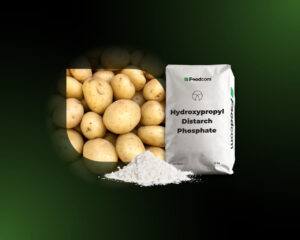
- E1442, or hydroxypropyl distarch phosphate, is a double-modified starch: cross-linked with phosphates and hydroxypropylated.
- It is made from maize starch (usually waxy maize), potato starch or tapioca; it is not a GMO product.
- It stands out for its resistance to acids, high temperatures and shear, and for its freeze-thaw stability.
- It is used as a thickener and stabiliser in sauces, desserts, fillings, flavoured yoghurts, instant soups and frozen meals.
- EFSA has concluded that modified starches are safe and has not set an acceptable daily intake for them; in the body, E1442 is digested much like ordinary starch.
In short: E1442 (hydroxypropyl distarch phosphate) is a modified starch obtained from maize, potato or tapioca starch by combining two modifications: phosphate cross-linking and hydroxypropylation. As a result, it withstands acids, high temperatures, intensive mixing and repeated freezing. In food, it acts as a thickener and stabiliser – in sauces, dressings, fruit fillings, desserts, flavoured yoghurts and frozen meals. It is not GMO and, according to EFSA, it is safe; on the label it may appear as “modified starch”.
What is E1442 (hydroxypropyl distarch phosphate)?
E1442 is the code of the food additive hydroxypropyl distarch phosphate (abbreviated HPDSP). It is one of the most widely used modified starches, applied as a thickener and stabiliser.
The name describes the two modifications that native starch undergoes:
- distarch phosphate – the starch chains are linked (cross-linked) by phosphate bridges, which strengthens the starch granules and protects them from breaking down,
- hydroxypropyl – hydroxypropyl groups are attached to the chains, which hinder the starch molecules from re-associating (retrogradation) and improve stability at low temperatures.
The modification concerns the starch itself, not the plant it comes from – which is why E1442 has nothing to do with genetically modified organisms. E1442 belongs to the wider group of modified starches, which we describe in the article Modified starches – types and applications in the industry.
How is E1442 made?
The raw material is native starch – most often from waxy maize (rich in amylopectin), potatoes or tapioca. Production takes place in an aqueous suspension under controlled conditions:
- cross-linking – the starch is treated with sodium trimetaphosphate or phosphorus oxychloride, which form phosphate bridges between the chains,
- hydroxypropylation – the starch reacts with propylene oxide, which attaches hydroxypropyl groups,
- purification and drying – the product is neutralised, washed free of reagent residues, dried and milled.
The extent of modification is strictly defined in the EU specifications for food additives – among other things, the content of hydroxypropyl groups, phosphorus and propylene chlorohydrin residues is limited. Both grades that require cooking (cook-up) and pregelatinised (instant) grades are available; the latter swell in cold water and thicken the product without heating.
What are the properties of E1442?
The double modification combines the advantages of both processes: cross-linking provides resistance to harsh processing conditions, while hydroxypropylation provides stability during storage.
| Property | E1442 – hydroxypropyl distarch phosphate |
|---|---|
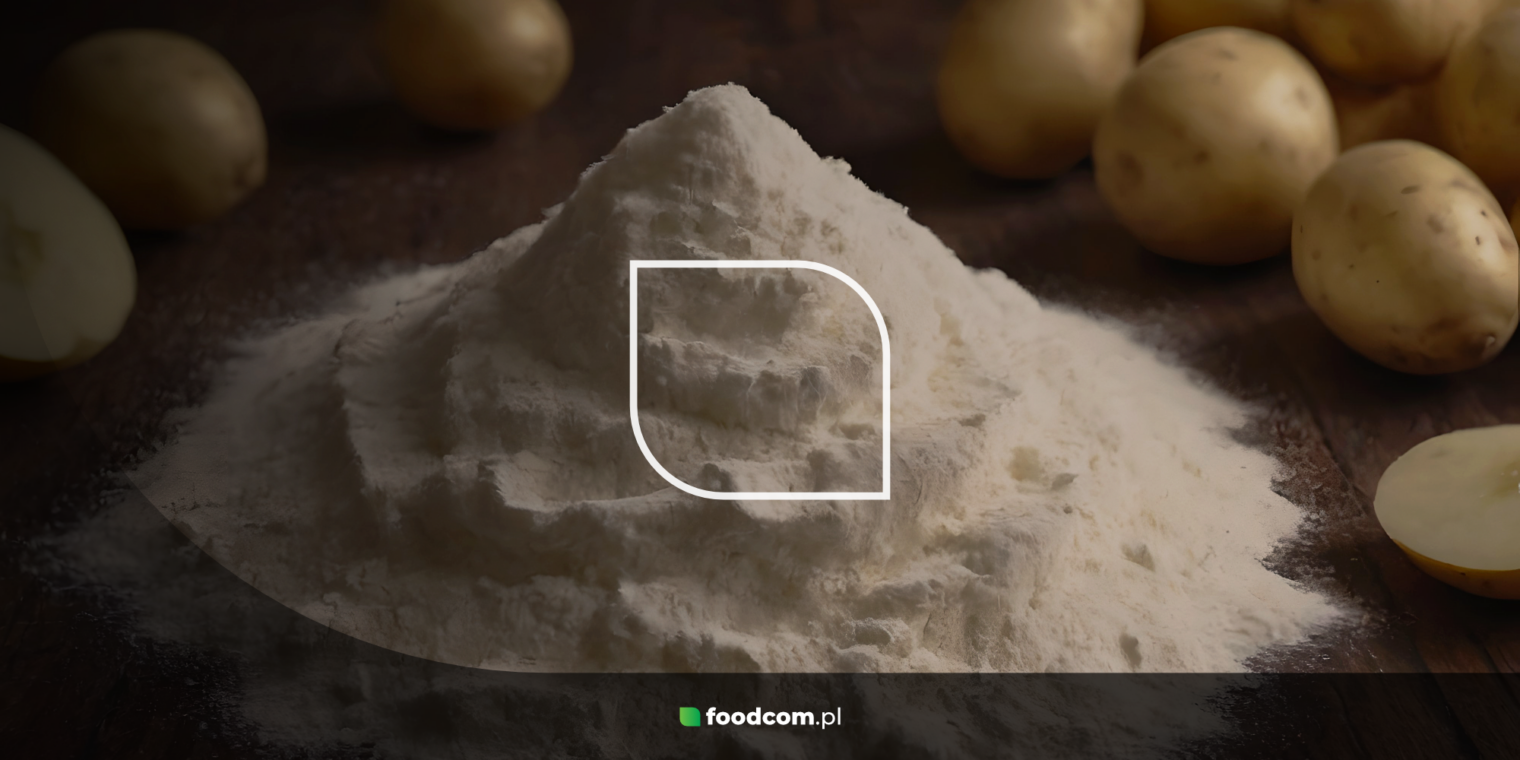
| Form | white or cream-coloured powder with a neutral odour and taste |
| Solubility | insoluble in cold water (except instant grades); swells on heating to form a viscous paste; insoluble in ethanol and fats |
| Process resistance | stable in acidic conditions, at high temperatures (pasteurisation, sterilisation, UHT) and under high shear |
| Freezing and thawing | very good stability – the product does not release water (no syneresis) after thawing |
| Retrogradation | limited – the paste does not harden or turn cloudy during storage |
| Texture | smooth, short, creamy; clear or slightly opalescent paste |
E1442 is not an emulsifier in the strict sense, but by increasing the viscosity of the aqueous phase it stabilises emulsions, e.g. in dressings and mayonnaise-based sauces, and prevents products from separating.
What is E1442 used for in food?
E1442 is authorised in the EU as a food additive in many categories, usually at quantum satis (with no specified maximum level). The most common applications:
- sauces, dressings and ketchups – thickens and stabilises despite low pH and high temperatures,
- fruit fillings and confectionery creams – does not thin during baking, retains gloss and shape,
- dairy desserts, puddings and flavoured yoghurts – gives a creamy consistency and prevents whey separation,
- ready meals and frozen meals – protects the texture of sauces after freezing and reheating,
- instant soups and sauces – pregelatinised grades thicken without cooking,
- canned vegetables, meat and fish – withstands sterilisation,
- meat products and delicatessen foods – binds water and improves yield.
The dosage depends on the recipe and usually ranges from about 1 to several per cent. On the label, the additive may appear as “E1442”, “hydroxypropyl distarch phosphate” or simply “modified starch”.
Where else is hydroxypropyl distarch phosphate used?
Beyond food, hydroxypropyl distarch phosphate is used in:
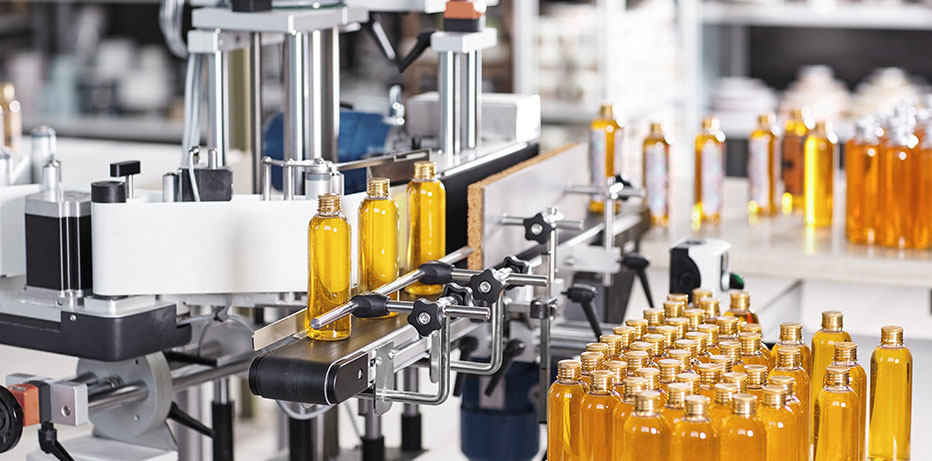
- cosmetics – under the INCI name Hydroxypropyl Starch Phosphate, it thickens and stabilises creams, lotions, gels and shampoos, improves spreadability and gives a matte, non-sticky finish,
- pharmaceuticals – as an excipient in tablets, suspensions and ointments,
- technical industries – in papermaking, textiles, adhesives and admixtures for mortars and plasters, where it improves workability and water retention.
How does E1442 differ from other modified starches?
More than a dozen modified starches with E14xx numbers are authorised in the EU. The most popular of them:
| E number | Name | Type of modification | Key features |
|---|---|---|---|
| E1404 | oxidised starch | oxidation | low viscosity, clear gels; confectionery, batters and coatings |
| E1412 | distarch phosphate | cross-linking | resistance to heat and acids |
| E1414 | acetylated distarch phosphate | cross-linking + acetylation | thermal and storage stability |
| E1420 | acetylated starch | acetylation | clarity, reduced retrogradation |
| E1422 | acetylated distarch adipate | cross-linking + acetylation | very popular in dairy and sauces; resistant to shear and acids |
| E1442 | hydroxypropyl distarch phosphate | cross-linking + hydroxypropylation | best freeze-thaw stability, resistance to acids and UHT |
| E1450 | starch sodium octenyl succinate | OSA esterification | emulsifying properties; beverage emulsions, microencapsulation |
E1442 and E1422 (acetylated distarch adipate) are often used interchangeably in dairy products and sauces. E1442 is chosen especially where the product will be frozen or kept in cold storage for a long time.
Is E1442 harmful?
No. In 2017, the European Food Safety Authority (EFSA) re-evaluated modified starches, including E1442, and concluded that there is no need to set an acceptable daily intake for them. In the body, E1442 is largely digested to glucose, just like ordinary starch – so it is neither harmful nor “slimming”. Large amounts may cause temporary bloating in sensitive individuals.
It is also worth knowing that:
- E1442 is not GMO – the modification is chemical and concerns the starch, not the plant,
- it is gluten-free when derived from maize, potatoes or tapioca; modified starch from wheat must be labelled as an allergen,
- it is vegan – it is made from plant-based raw materials,
- in food for infants and young children, only selected modified starches are permitted, and in limited amounts.
How to choose E1442 for production?
When choosing E1442, it is worth specifying:
- raw material – waxy maize, potatoes or tapioca; it affects taste, clarity and texture,
- type – for cooking (cook-up) or pregelatinised (instant),
- viscosity and degree of modification – matched to the pH, temperature and duration of the process,
- documentation – specification, gluten-free, non-GMO, halal or kosher declarations.
If the goal is a clean label, native or physically modified starches may be an alternative – we discuss their properties in our articles on potato starch, maize starch and tapioca starch.
Foodcom supplies E1442 modified starch and E1422 in industrial packaging with full quality documentation. For specifications and availability, contact our sales team.