
- Erythritol is a polyol designated as E968, used as a low-calorie sugar substitute.
- It does not affect blood glucose levels and does not cause tooth decay, making it suitable for diabetics.
- It is highly stable and is used in a wide range of food products.
- Its popularity stems from a combination of technological functionality, neutral taste, and growing demand for sugar-free products.
Erythritol is a popular sugar substitute that is safe for people with diabetes, those watching their diet, and those concerned about dental health – since this substance does not cause tooth decay. Its high stability, predictability in recipes, market acceptance, and natural origin make it a popular choice in food production.
What is erythritol?
Erythritol is a sugar alcohol, or polyol, approved in the European Union as a food additive designated as E968. It was first used as a sweetener on the market in 1990 in Japan. Erythritol occurs naturally in certain fruits (e.g., pears, watermelons, grapes), seaweed, red wine, and fermented products, but it can also be produced industrially.
Erythritol is considered safe for diabetics because it does not raise blood sugar levels. It also does not contribute to tooth decay. It is gluten-free and vegan, suitable for people following various diets, such as the ketogenic or low-calorie diet. This ingredient has zero calories and is safe for the body – most of the ingested amount is excreted unchanged in urine. However, when consumed in large quantities, it may have a laxative effect.
Erythritol is primarily used as a sweetener, offering approximately 60 – 70% of the sweetness of sucrose. In the food industry, however, it functions not only as a sweetener – it also influences the mouthfeel and works well with other sweeteners, which is why it is successfully used to shape a product’s overall sensory profile.

How and from what is E968 produced?
Erythritol occurs naturally in small amounts in certain fruits and fermented products, but its industrial-scale production requires a controlled process. It is obtained by fermenting carbohydrate sources, such as corn starch, using specific yeast strains. The fermentation process fits well into standardized production: it facilitates control over parameters, quality, and batch consistency. The resulting product is then purified and dried.
To increase the efficiency of the fermentation process, it is possible to use genetically modified Yarrowia lipolytica yeast, which uses glycerol as a fermentation substrate and is resistant to high osmotic pressures.
Key properties of erythritol
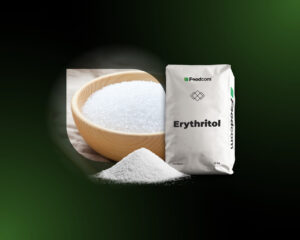
Erythritol is a white crystalline powder, sometimes in the form of fine granules. It is highly soluble in water. It has a sweet taste, and direct consumption produces a cooling sensation in the mouth. This is often an advantage in the production of chewing gum, lozenges, or certain candies.
Erythritol is also resistant to high temperatures and acidic environments, which ensures its stability and facilitates its use in industry. Due to its zero caloric value, it is often used as an ingredient in sugar-free diet products and foods intended for diabetics. This is because consuming erythritol does not affect blood glucose or insulin levels.
Is erythritol harmful?
No – current data do not clearly indicate any negative health effects from consuming erythritol in small amounts; however, discussions are still ongoing regarding a potential increased risk of cardiovascular disease associated with high blood levels of this compound. When used in moderate amounts, however, it is still considered a healthy alternative to sugar, although excessive consumption may have a laxative effect.
This highlights the need for careful product formulation and transparent brand communication. The EFSA (European Food Safety Authority) considers erythritol safe when consumed at levels not exceeding 0.5 g/kg of body weight per day. A person weighing 60 kg can therefore safely consume up to 30 g of erythritol per day.
Uses of erythritol
Erythritol is most widely used in the food industry, where it enhances the sweetness of a product while keeping calories to a minimum. It appears in sugar-free items, reduced-calorie products, and sweets. It is used in particular in products such as:
- desserts,
- yogurts,
- jellies,
- bars,
- candies,
- baking mixes,
- select beverages.
In many products, erythritol is combined with other sweeteners to improve the sensory and flavor profile or texture. Erythritol can serve as a flavor and texture stabilizer, a flavor enhancer, and a thickening agent.
This ingredient is also used in the pharmaceutical industry, including in tablets, lozenges, and powdered or sachet products. It acts as a carrier for active ingredients and also possesses moisture-retaining and antioxidant properties.
Erythritol is also added to cosmetic products – body care items (e.g., anti-aging serums and creams) and personal hygiene products (deodorants, creams). It is often an ingredient in toothpaste and mouthwash, giving them a sweet, refreshing taste without the risk of tooth decay.

What accounts for erythritol’s popularity?
Erythritol is popular in the industry because it combines several qualities valued in the market:
- potential for use in popular diet products or sugar-free items, as well as natural products;
- versatility – it is suitable for baking, sweetening beverages, and making confectionery;
- stability and high technological potential (e.g., combining with other sweeteners);
- standardization of the production process;
- wide availability.
Erythritol’s popularity is also due to its good tolerance by the digestive system. Compared to xylitol and other sweeteners, erythritol is less likely to cause stomach discomfort – it is mostly rapidly absorbed into the bloodstream and excreted unchanged in urine. It also has an appealing, sweet taste comparable to sucrose without the bitter aftertaste found in, for example, stevia.
It is important to remember that when incorporating this ingredient into production, it is necessary to understand its technological role and the permissible conditions of use in a specific product category and in a given country.
Where to buy erythritol?
When choosing an erythritol supplier, a low price isn’t the only factor that matters. More important are parameters such as: minimum order quantity, delivery method, availability, product specifications, and quality of service. Foodcom S.A., as a trusted partner in the trade of ingredients for the food industry, offers business-partner-focused service, professional consulting, and consistent supply.
As a well-known sweetener, erythritol doesn’t need excessive marketing today – it’s widely used in home cooking as well as in the food, cosmetics, and pharmaceutical industries. It offers manufacturers tangible benefits: very low caloric value combined with an appealing taste, technological stability, and the ability to develop products with reduced sugar content.