- Arabica coffee prices have risen by nearly 30% since the beginning of the year.
- Harvests in Brazil and Vietnam have fallen by double-digit percentages.
- Global coffee stocks are at their lowest level in years.
- Rising raw material prices are leading to higher coffee prices in stores and restaurants.
Coffee prices are rising at an alarming rate, and the industry is facing one of its biggest challenges in recent years. Arabica prices have risen by more than 28% over the past month and nearly 29% since the beginning of the year, reaching $4.20 per pound. Importers, producers, and the HoReCa sector are watching the situation on the commodity exchanges with concern, wondering where the price increases will bottom out.
Experts point out that the crisis is mainly due to reduced harvests in Brazil and Vietnam, dwindling global stocks, and rising transportation and production costs. “We haven’t seen such a sharp price increase in years. The market is changing before our very eyes, and we need to be prepared for it,” comments Marcin Stradowski, Commercial Director and Partner at Foodcom S.A.
Coffee is a product of global significance—approximately 2.25 billion cups of this beverage are consumed worldwide every day. This means that every price fluctuation affects billions of consumers, as well as millions of people working in this sector. It is estimated that as many as 125 million people worldwide depend economically on coffee.
How long will this trend last? And what does it mean for consumers?
Crop Crisis and Logistical Problems
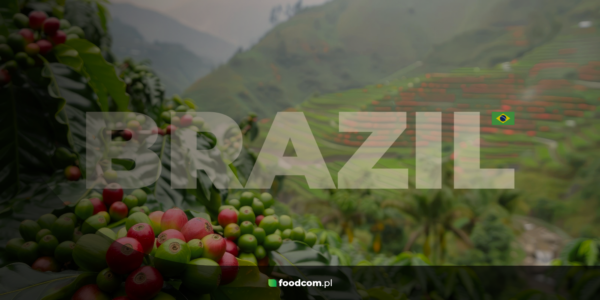
The rapid rise in prices is primarily driven by difficulties in the main producing regions. Brazil, the largest exporter of Arabica, is grappling with the effects of extreme weather conditions. Droughts and heavy rainfall have caused this year’s harvest to be about 12% smaller than last season’s.
The situation is no better in Vietnam, where severe logistical disruptions and drought have led to a 20% drop in Robusta production, reaching its lowest level in four years. This is particularly concerning because Brazil and Vietnam are the world’s two largest coffee producers. Together with Colombia, which is also facing harvest problems, they account for the majority of global production.
Global coffee stocks are also dwindling, which is further driving up prices. The ICE Exchange reported that by 2025, coffee reserves had already fallen by 11%, reaching their lowest level in many years. Rising production costs, increasing fertilizer prices, and higher freight rates are further driving up prices, and many producers are holding off on sales, hoping for further increases in the commodity’s value.
An additional challenge for the market will be the EU Deforestation Regulation (EUDR), which is set to take effect and will require importers to strictly verify the origin of the raw material. “The EUDR regulations may drive prices up even further, as producers will have to bear additional certification costs. Some countries may struggle to meet these requirements, which will limit supply,” says Marcin Stradowski of Foodcom S.A.
“Fake coffee”—a new market problem?
As if that weren’t enough, another troubling trend has emerged—“fake coffee.” In Brazil, cases have been detected of coffee-like products being sold that actually contain only trace amounts of real beans. The rest consists of production waste, plant pulp, and synthetic flavorings.
“High prices and limited supply are causing some to try to circumvent the system by bringing coffee of dubious quality to market. This could seriously harm the entire industry, because if consumers lose trust in the product, it will affect everyone—from growers to roasters and retailers. Certification organizations and major market players are already trying to combat this phenomenon, but the higher the prices, the greater the temptation to engage in unfair practices,” explains Marcin Stradowski, an expert at Foodcom S.A.
Impact on Retail Prices and the HoReCa Sector
Rising raw material prices directly translate into higher costs for consumers. Coffee on store shelves is already getting more expensive, and experts predict that price increases could reach as high as 25% in the first half of the year.
The hospitality sector is feeling the price hikes the most. Cafés and restaurants are facing rising costs for purchasing coffee beans, which means one thing: price increases for customers. In Italy, the average price of an espresso has exceeded 1.20 EUR, and in major cities it’s already over 2 EUR. The situation is similar in other European countries—by the end of the year, we may be paying up to 30% more for a cup of coffee than we do now.
Prices are also being driven up by high gas prices, which represent a significant cost for roasters. “High energy prices are significantly driving up the costs of roasting beans. For small roasters, this is a huge challenge because they cannot negotiate raw material prices as easily as large producers,” adds Marcin Stradowski.
What lies ahead for the market in the coming months?
Experts predict that coffee prices may remain high for most of 2025. Much depends on the upcoming harvests in South America, as well as the logistical situation in Asia. If weather conditions do not improve and exports from Vietnam remain limited, further price increases are inevitable.
“The industry is looking for ways to minimize the impact of price hikes. More and more roasters and producers are opting for blends with a higher proportion of Robusta, because despite the price increases, it remains a cheaper alternative to Arabica. We’re also seeing growing interest in long-term contracts, which allow companies to lock in prices and avoid sharp fluctuations in the raw materials market. “Everyone is trying to find a way to survive this difficult period without losing customers,” comments Marcin Stradowski, an expert at Foodcom S.A.
The entire industry faces a huge challenge. It is a global business worth $102 billion that employs millions of people worldwide. If the situation does not improve, price increases may become even more noticeable, both for businesses and ordinary consumers. The coming months will reveal whether the situation can be stabilized or whether coffee will become an even more expensive product.