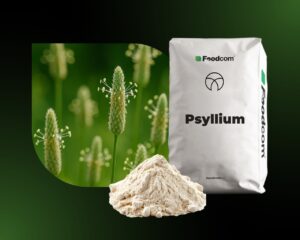
- Psyllium (Plantago ovata) is a plant whose seed husks are rich in dietary fiber.
- Psyllium husk absorbs water, swells and forms a gel-like structure that affects food texture.
- Psyllium is used in gluten-free baking, fiber blends and dietary supplements.
- Key quality factors include husk purity, particle size and product specifications.
Psyllium is known primarily as a source of fiber used in food and dietary supplements. The husk of its seeds, sold under the name psyllium, has unique properties. When it comes into contact with water, it swells and forms a gel-like structure that helps achieve the desired consistency and texture in food products.
In the food industry, psyllium is used, among other things, in gluten-free baked goods, functional blends, and fiber-enriched products. However, the available forms of psyllium husk differ in their degree of fineness and how they behave during processing. What are the characteristics of psyllium, how is the husk extracted from it, and what should you check before making an industrial purchase?
What Is Psyllium?
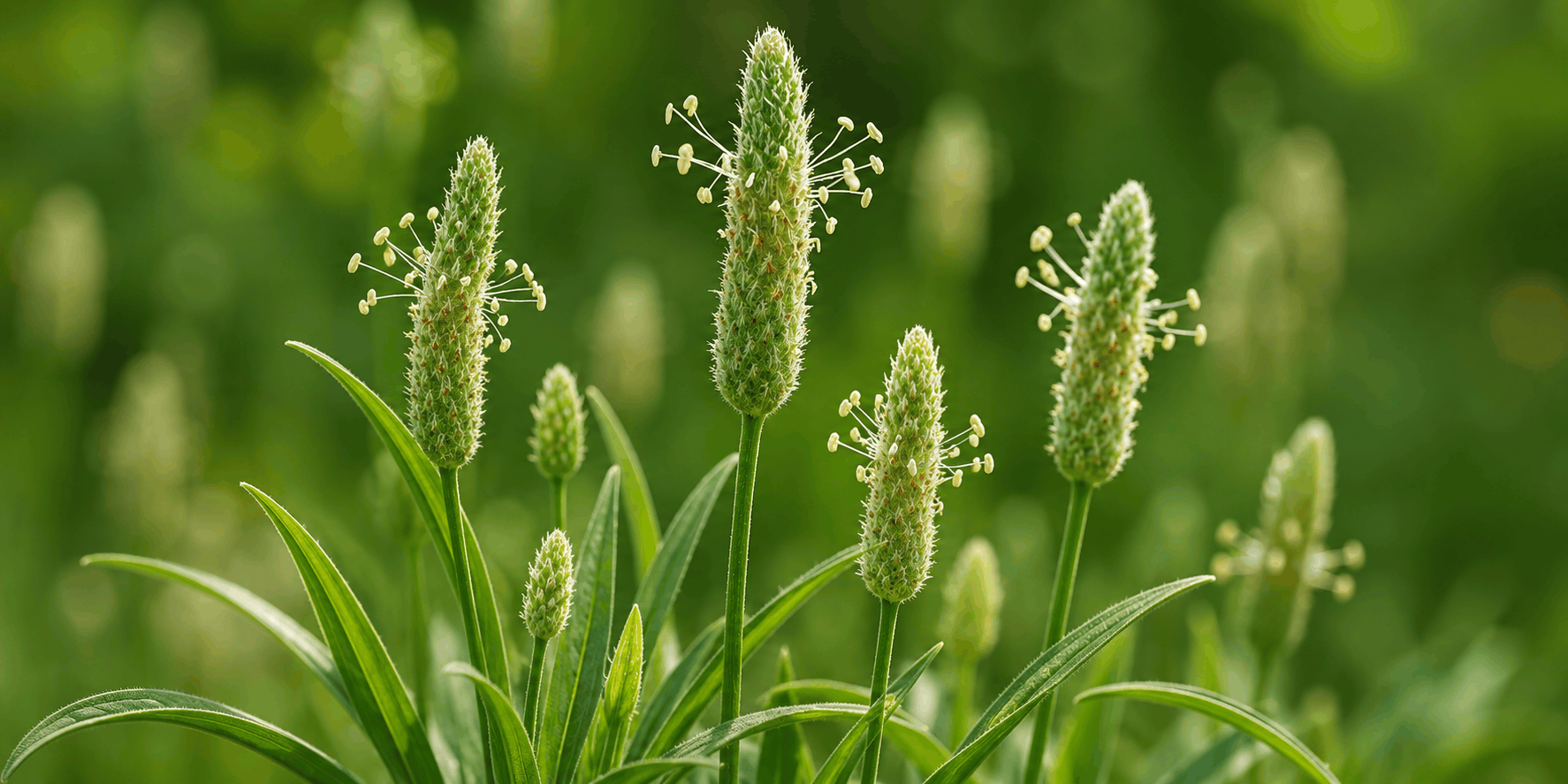
Psyllium (Plantago ovata) belongs to the plantain family (Plantaginaceae). It is a small herbaceous plant with narrow leaves and small flowers arranged in spike-like inflorescences. It occurs naturally in the Mediterranean region, North Africa, and Asia, among other places. India is a major production area, particularly the states of Gujarat and Rajasthan.
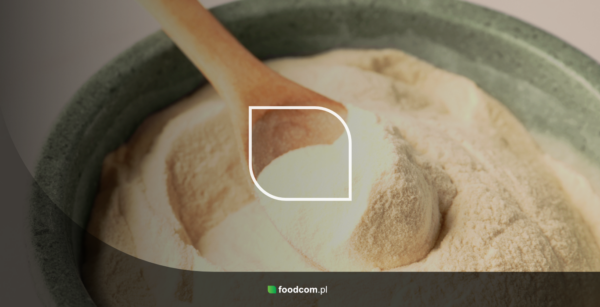
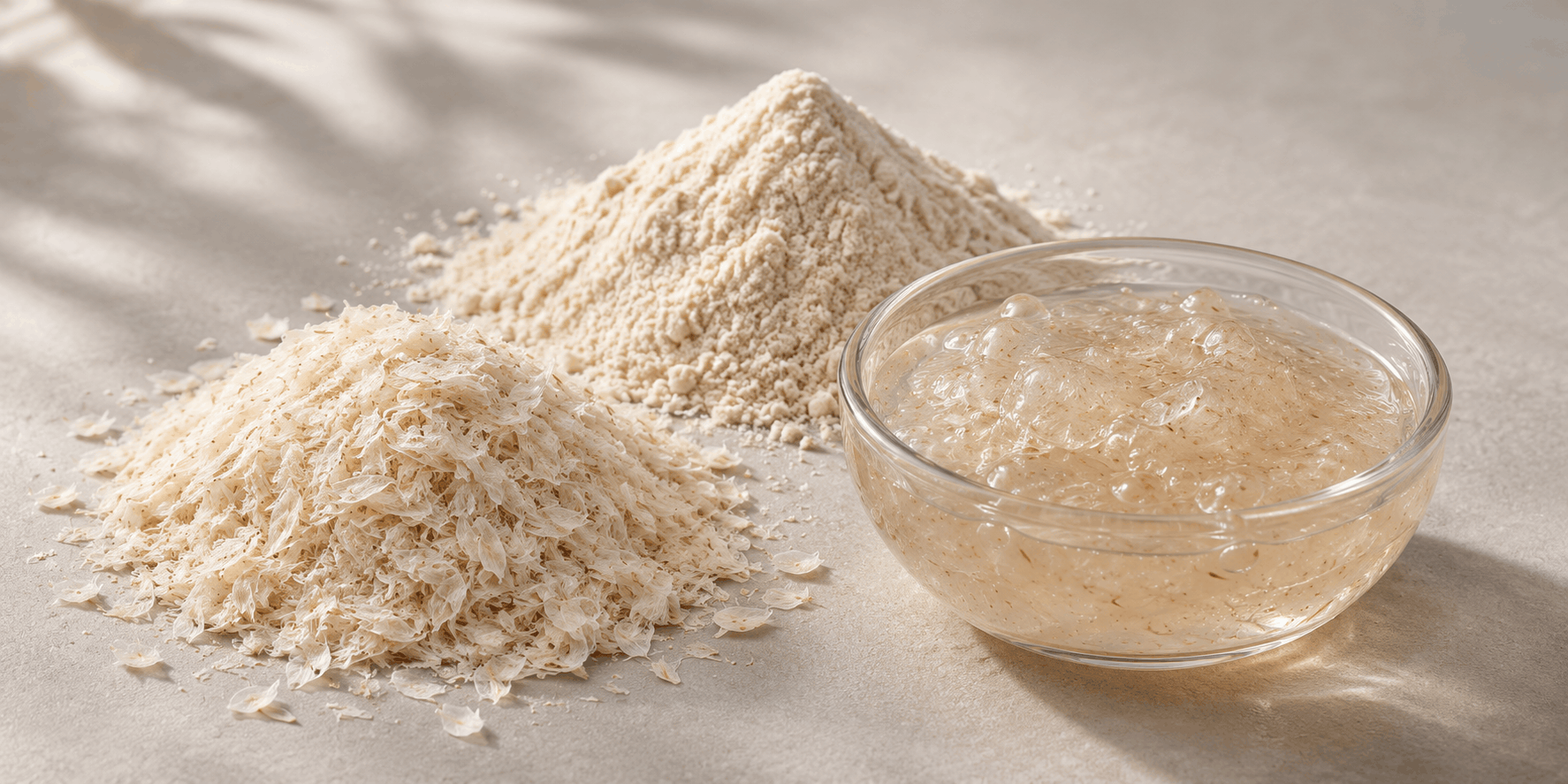
In industrial applications, the outer layer of the seeds is primarily used. After it is separated and purified, psyllium husk—also known as ispaghula husk—is produced. It ranges in color from light beige to brown and is available in the form of larger pieces or finely ground powder.
The term “psyllium” itself is sometimes used to refer to the seeds of other plantain species. Therefore, when comparing products, it is important to check the botanical name and the part of the plant used in production. This allows you to properly distinguish between products sold under similar names and select the appropriate ingredient for your recipe.
Composition and Properties of Plantain Husk
Psyllium husks contain a large amount of dietary fiber, including both water-soluble and water-insoluble fractions. Their characteristic properties stem primarily from the presence of polysaccharides, among which arabinoxylans constitute an important group. It is these polysaccharides that are responsible for a significant portion of psyllium’s ability to swell and form a viscous structure.
Thanks to this composition, the husk is used both to enrich products with fiber and to shape their consistency. It helps food mixtures retain their structure during mixing, forming, and further processing.
However, the properties of commercially available products may vary. These are influenced, among other factors, by the purity of the husk, the degree of grinding, and processing conditions. Therefore, two raw materials described as psyllium do not always produce the same effect in the final formulation.
Water-binding and gel-forming capacity
Upon the addition of water, the polysaccharides present in the husk hydrate, and the mixture gradually becomes thicker. The resulting structure retains some of the water and limits its free movement among the other ingredients. This helps achieve a more uniform consistency and improves the product’s cohesion.
The rate of swelling depends on particle size, contact time with water, and mixing intensity. The proportions of the ingredients are also important. If there is too little liquid, the mixture may become excessively thick and difficult to process further.
In industrial production, these parameters are already taken into account during the formulation stage. Proper dosing of psyllium helps achieve the desired texture without the need for subsequent adjustments to the entire process.
How is psyllium husk produced?
Production begins with the harvest of ripe psyllium seeds. After removing impurities and plant residues, the seeds undergo mechanical processing to separate their outer layers. The resulting material is then cleaned and sorted to achieve the required commercial quality.
The husks may be further ground and sifted, depending on the intended use. This results in products with varying particle sizes, ranging from larger fragments to fine powder. The finished raw material is packaged and stored under conditions that protect it from moisture and contaminants.
Unlike the production of plant extracts, the extraction of psyllium husks relies primarily on the mechanical separation of seed parts. This process preserves the natural fiber responsible for the properties of the finished product.
Psyllium Husk vs. Whole Psyllium Seeds
Whole seeds contain both the outer layers, which are rich in fiber, and the inner parts, which contain, among other things, proteins and fats. Purified husks have a higher proportion of the components responsible for swelling and forming a viscous structure.
This difference affects the application of both forms. The husk works particularly well in products requiring strong water-binding properties. Whole seeds can also be used in food, but they are not a direct substitute for the husk in the same quantity.
When developing recipes, the degree of grinding must also be taken into account. Ground husks may distribute differently in the mixture than larger pieces, which affects the product preparation process.
How to Use Psyllium Husk?
How psyllium is used depends on the type of product and the desired effect. In baking, the husks can first be mixed with dry ingredients, and then water can be added. Another option is to hydrate them beforehand and incorporate the resulting mixture into the recipe.
When mixing, care must be taken to ensure the ingredient is distributed evenly. Fine powder added directly to liquid can quickly form lumps, so the order in which ingredients are added and the intensity of mixing are crucial. When changing the amount of psyllium, it is often necessary to adjust the hydration of the entire mixture as well.
Psyllium husk is also an ingredient in dietary fiber supplements intended for consumption. Due to its high swelling capacity, it is important to follow the preparation instructions and use the appropriate amount of liquid. Dry husks or powder should not be swallowed without liquid, as this may pose a risk of choking or obstruction.
The Use of Psyllium in the Food Industry
Psyllium is used both to enrich foods with fiber and to give products the desired texture. In baking, it helps shape the properties of dough, while in fiber blends, the consistency after preparation and the distribution of ingredients are also important.
Psyllium in gluten-free baking
In traditional wheat dough, gluten forms an elastic network that helps trap gases during rising. In gluten-free baked goods, the desired structure is achieved by combining flours, starches, and water-binding ingredients. One of these is psyllium husk.
When hydrated, psyllium increases the dough’s cohesiveness and makes it easier to shape. In a properly formulated recipe, it can improve the texture of the crumb and help maintain the moisture content of the finished bread. However, it does not replace all the functions of gluten, and the final result depends on the other ingredients and the water content.
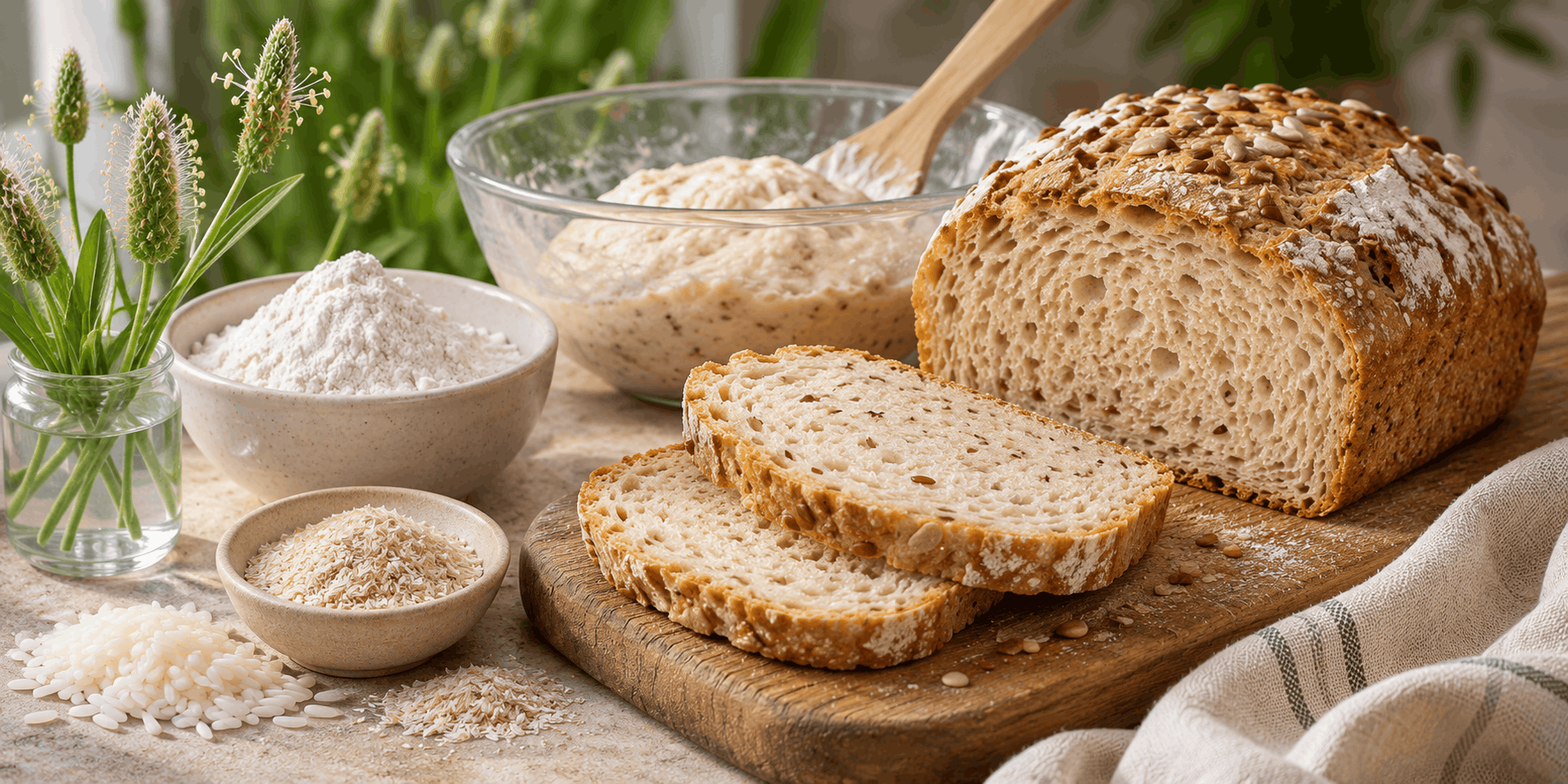
Psyllium husk is often combined with gluten-free flours, such as rice flour. These blends are used to make bread, rolls, and other baked goods. The flour forms the basis of the recipe, while psyllium helps achieve a dough with the right consistency.
The hydration level is very important. Increasing the amount of psyllium husk requires readjusting the liquid proportions, as a dough that is too dense can hinder the dough’s rise. As a result, the baked goods may have a smaller volume and a denser crumb. Therefore, new recipes require technological trials to evaluate the properties of the finished product.
Fiber Blends and Functional Products
Psyllium husk is used in products designed to increase dietary fiber content. It can be used alone or in combination with other plant-based ingredients, including in powdered blends, sachets, and dietary supplements.
In bars and select cereal products, psyllium helps bind ingredients and achieve the desired consistency of the mixture. In mixes intended for preparation with water, however, the consistency achieved after mixing is particularly important.
The rate of swelling is also taken into account when developing such products. Excessive viscosity or a rapid increase in viscosity can make it difficult to prepare the mixture; therefore, the proportion of psyllium should correspond to both the technological properties and the intended use of the finished product.
Psyllium and Other Types of Fiber
Dietary fiber encompasses various groups of plant-based components that may behave differently during processing. Some of them strongly bind water and form viscous systems, while others are used primarily to increase fiber content or modify food texture.
An example of a raw material with different properties is inulin, which belongs to the fructan group. It is used, among other things, in dairy products, confectionery, and functional foods. In appropriate formulations, it can affect creaminess and texture; however, its behavior differs from that of highly swelling psyllium husk.
The choice of the appropriate fiber depends on the product’s intended use. If intense water binding and improved cohesion are needed, psyllium may be particularly useful. Inulin is used in other technological applications, and both ingredients can also be present in a single recipe.
How to Choose Psyllium Husk?
Before purchasing psyllium, check its botanical name, purity, and form. Particle size, moisture content, and ash content are also important. These parameters help compare available products and assess their suitability for the intended application.
Commercial specifications often list the percentage purity of the husk. It is important to remember that this does not mean the same thing as dietary fiber content. When comparing products, you should therefore pay attention to how individual parameters are described and the methods used to determine them.
Quality documentation should include the product specification and test results specific to the particular batch. Depending on the intended use, tests may include microbiological purity, heavy metals, and pesticide residues. For regular orders, it is advisable to compare the parameters of successive batches to avoid unexpected changes during production.
For technological applications, it is also a good idea to conduct trials with the selected raw material. These trials allow you to assess its behavior during mixing and adjust the amount of the ingredient to meet the requirements of the finished product.
What affects the quality and availability of psyllium?
The quality of psyllium husk depends on growing conditions, the harvest date, and the seed processing method. Proper cleaning and separation of the outer layers ensure a product of the required purity. It is also important to store the husks in conditions that protect them from moisture and contaminants.
When making wholesale purchases, companies consider the origin of the material, the availability of a specific quality, package sizes, and shipping conditions. India is one of the leading producers of psyllium, so the situation in the Indian market can affect supply and the organization of shipments to other regions.
Psyllium Husk in Foodcom S.A.’s Product Line
Foodcom S.A. offers psyllium husk derived from plantain seeds (*Plantago ovata*). According to the specifications, the product consists of purified husks, ranging from larger pieces to finely ground powder, with a declared purity of at least 95%. Its moisture content is a maximum of 12%, and the acid-insoluble ash content does not exceed 1%. The raw material is supplied in 25-kg bags or Big Bags, depending on the customer’s needs.
Plantain in Food Production
The use of psyllium in food production requires proper adaptation of the raw material to the recipe. The same psyllium husk may behave differently in a baking mix than in a product intended for preparation with water. Therefore, in addition to the parameters listed in the specification, process trials are also important, as they allow for selecting the correct proportions of ingredients and achieving the desired consistency of the finished product.