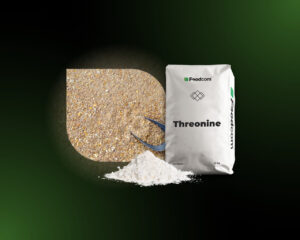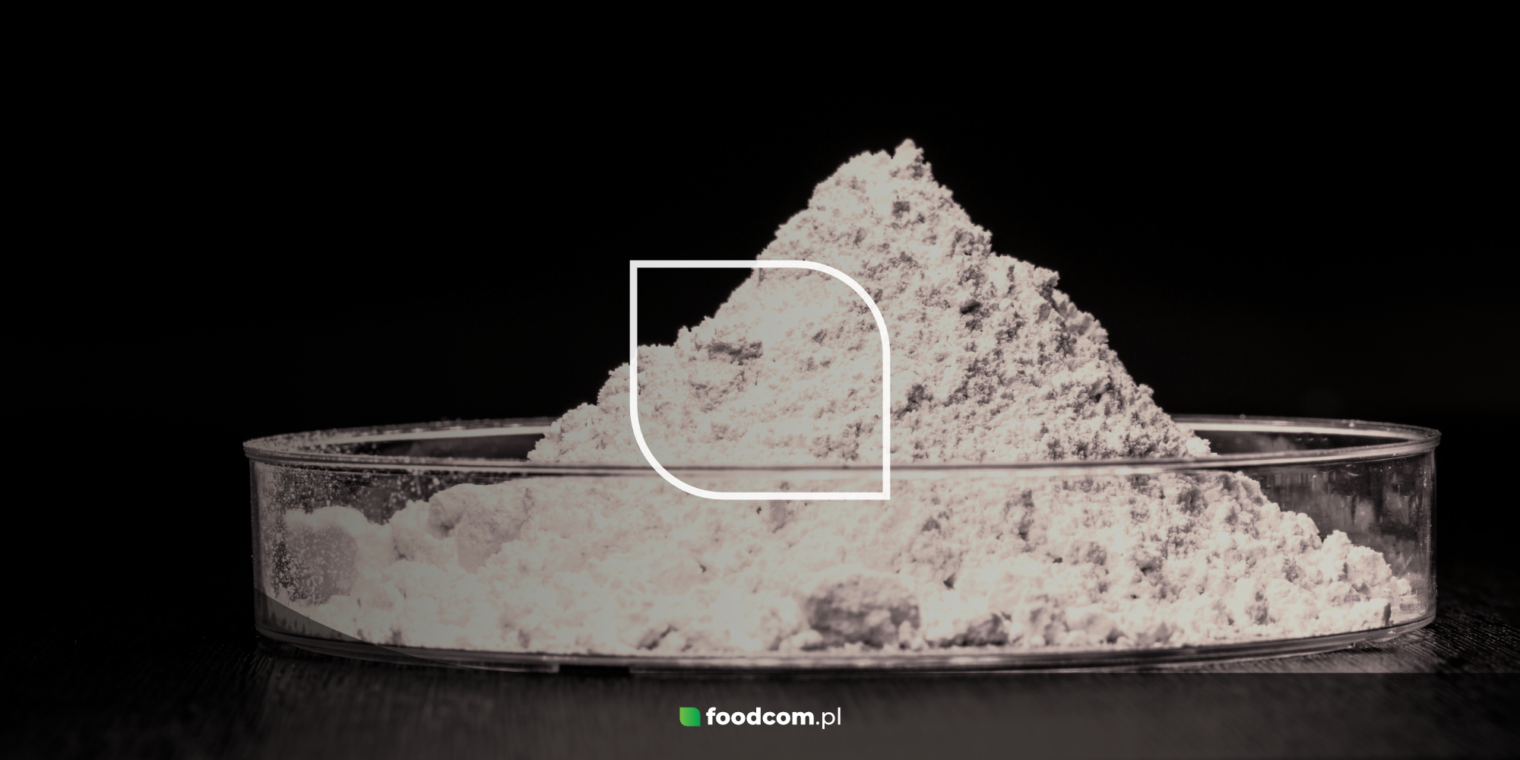
- Threonine is an essential amino acid that must be supplied through the diet or a properly formulated feed.
- In the industry, L-threonine is most commonly used—the form employed in animal nutrition, supplementation, and feed production.
- L-threonine helps balance the amino acid profile, control nutritional value, and ensure the consistency of the finished product’s parameters.
- In the feed sector, it is particularly important in swine and poultry nutrition, where it helps to precisely formulate mixtures without excessively increasing the total protein level.
- In B2B trade, the purity of the raw material, compliance with specifications, complete documentation, batch consistency, and supply stability are of key importance.
Precise amino acid balancing is becoming increasingly important in the production of animal feed, dietary supplements, functional foods, and specialized nutritional formulations. In this context, threonine plays an important role as an essential amino acid that must be supplied through the diet or a properly formulated product. In the industry, L-threonine is valued primarily for its ability to supplement the amino acid profile, support consistency in composition, and optimize the parameters of final products.
What is threonine?
Threonine belongs to the group of protein amino acids and is classified as an essential amino acid. This means it must be supplied externally, both in human nutrition and in the diets of monogastric animals. Its importance stems from its role in protein synthesis and in metabolic processes where the availability of amino acids influences the efficient utilization of the total protein pool.
In the raw materials trade, the term “L-threonine” is most commonly used. This is the L-isomer of threonine, i.e., the stereochemical form suitable for nutritional, supplementation, and feed applications. The term “threonine” alone can refer to the compound in a general sense, whereas “L-threonine” indicates the form that is essential for formulating recipes and balancing amino acid composition.

The Presence of Threonine in Food
The natural occurrence of threonine in food is associated with protein-containing products. Animal sources include meat, fish, eggs, and dairy products. In plant-based raw materials, threonine is found, among other things, in legumes, grains, seeds, and protein fractions derived from plant-based raw materials.
However, what matters to the industry is not only the presence of the amino acid itself, but also its contribution to the amino acid profile, protein digestibility, and the ability to standardize the formulation. In the production of concentrates, isolates, protein blends, and nutritional preparations, this allows for control over the nutritional value and the consistency of the finished product’s parameters.
Properties of Threonine
The properties of threonine stem primarily from its role as a protein component. Threonine participates in the synthesis of structural and enzymatic proteins and in maintaining nitrogen balance. In technological practice, it is analyzed as part of a product’s amino acid profile, especially where precise balancing of nutritional value is critical.
Another important aspect is its role in the production of mucins—glycoproteins that form the mucus layer in the gastrointestinal tract. For this reason, threonine is discussed in scientific literature in the context of the intestinal barrier. However, caution should be exercised in commercial communications—L-threonine should not be presented as a therapeutic ingredient, but rather as an amino acid with nutritional and technological functions.
Functions of Threonine
The functions of threonine are important from both a nutritional and a technological perspective. This amino acid participates in the synthesis of structural and enzymatic proteins, supports the maintenance of nitrogen balance, and is involved in processes related to the formation of mucins—glycoproteins that constitute an important component of the gastrointestinal tract’s mucosal layer. For this reason, threonine is analyzed in the context of a proper amino acid profile and protein quality in food products.
In industrial formulations, L-threonine helps supplement the amino acid composition of a recipe and better align the product with specified parameters. This is important when developing protein blends, animal feeds, supplements, and specialized nutritional products, where consistency in composition, control of nutritional value, and compliance with quality requirements are essential.
Applications of Threonine
L-threonine is used due to its role in amino acid balancing and its versatility across various market segments. This raw material is used in supplement formulations, animal feed, food products, and specialized nutrition, where standardization, composition control, and the consistency of the finished product’s parameters are of critical importance.
Applications of L-threonine in the food industry
The use of L-threonine spans sectors where precise formulation design is essential. In supplementation, it complements the protein profile; in animal nutrition, it serves as a feed additive to balance amino acids; and in specialized nutritional formulations, it can be a component of recipes designed for specific nutritional value and compositional consistency.
| Area of Application | Function of L-threonine | Importance for manufacturers |
| dietary supplements | supplementing the amino acid profile | Formulation standardization |
| functional foods | enhancing the product’s nutritional value | composition control |
| sports nutrition | component of amino acid blends | Formulation of EAA blends and high-protein products |
| specialized nutritional formulations | precise composition supplementation | tailoring the product to technological specifications |
Threonine in Animal Nutrition
In the feed industry, L-threonine is an essential nutritional supplement for swine and poultry. In diets based on cereal ingredients, it may be the second or third limiting amino acid; therefore, its inclusion in the formulation affects the efficiency of protein utilization. Precise supplementation with threonine allows the feed composition to be tailored to the animals’ needs without the need to excessively increase the total protein level.
L-threonine in swine nutrition
In swine nutrition, threonine can be one of the limiting amino acids, particularly in diets based on grains and soybean meal. Its appropriate inclusion in the formulation supports protein balance, improves the utilization of other amino acids, and enables precise formulation of swine feeds without excessively raising the total protein level.
L-threonine in poultry nutrition
In poultry feeds, threonine is analyzed in terms of amino acid profile, protein utilization, and precise nutrition. In poultry production, where formulations require high precision, L-threonine helps tailor feed composition to technological specifications and create consistent mixtures with controlled quality parameters.
L-threonine in cattle nutrition
For cattle and other ruminants, the role of threonine must be considered carefully, as the amino acid profile is more complex due to rumen metabolism and protein processing prior to the actual absorption of nutrients. L-threonine is therefore not a standard additive in every cattle feed, but it may be important in specialized feeding strategies where protein balance, amino acid availability, and the requirements of a specific feeding system are analyzed.
Quality Parameters and Importance in B2B Trade
In B2B trade, industrial customers primarily evaluate the purity of L-threonine, the product form, compliance with specifications, batch consistency, and the availability of technical documentation. Product specifications, safety data sheets, quality certificates, and declarations of conformity are standard requirements.
Depending on the intended use of the product, industrial customers focus primarily on:
• the production method and origin of the raw material,
• GMO or non-GMO status,
• purity level and compliance with specifications,
• microbiological parameters and contamination levels,
• compliance with requirements for feed, food, or dietary supplement applications,
• the ability to tailor documentation to customer requirements.
Supply chain stability is also of great importance. For manufacturers of supplements, feed, and functional foods, irregular availability of amino acids can result in formula changes, production downtime, or increased procurement costs. Therefore, the choice of a supplier should take into account not only price but also quality control, logistics, and consistent delivery parameters.
Threonine as a Formulation Ingredient
Threonine remains an essential amino acid of significant importance in nutrition, supplementation, and feed production, as it participates in protein synthesis, maintaining nitrogen balance, mucin formation, and balancing the amino acid profile in industrial formulations. In B2B practice, L-threonine is valued as a raw material that enables the precise formulation of products such as dietary supplements, animal feed, functional foods, and specialized nutritional formulations. For manufacturers, the key factors remain raw material quality, compliance with specifications, complete documentation, and supply stability, all of which impact the security of the procurement process and the consistency of the final product.
Where to buy L-threonine?
When selecting a supplier of L-threonine, it is not only the price that matters, but also supply stability, batch availability, compliance with specifications, and complete technical documentation. For manufacturers of animal feed, supplements, and specialized nutritional formulations, the consistency of raw material parameters and the ability to tailor purchasing terms to the scale of production are also important. Foodcom S.A. supports B2B customers in sourcing amino acids used in the feed, supplement, and food industries.