- Potato starch thickens products, binds water, and influences their texture.
- It is used in the food, cosmetics, and paper industries, as well as in adhesive production.
- It differs from corn starch in swelling capacity, viscosity, and starch paste clarity.
- Its quality and availability depend on potato harvests and processing conditions.
Potato starch is one of the most versatile plant-based raw materials used in food production. It can be found in sauces, desserts, baked goods, and gluten-free products, but its uses extend far beyond the food industry. It is also used by manufacturers of cosmetics, paper, and adhesives.
Potato starch is valued for its ability to thicken, bind water, and shape texture. It has a neutral taste and odor, allowing it to be added to various recipes without significantly altering their flavor profile. Its properties help achieve the desired product consistency, although the final result depends on the processing method and other ingredients.
What is potato starch and how is it made?
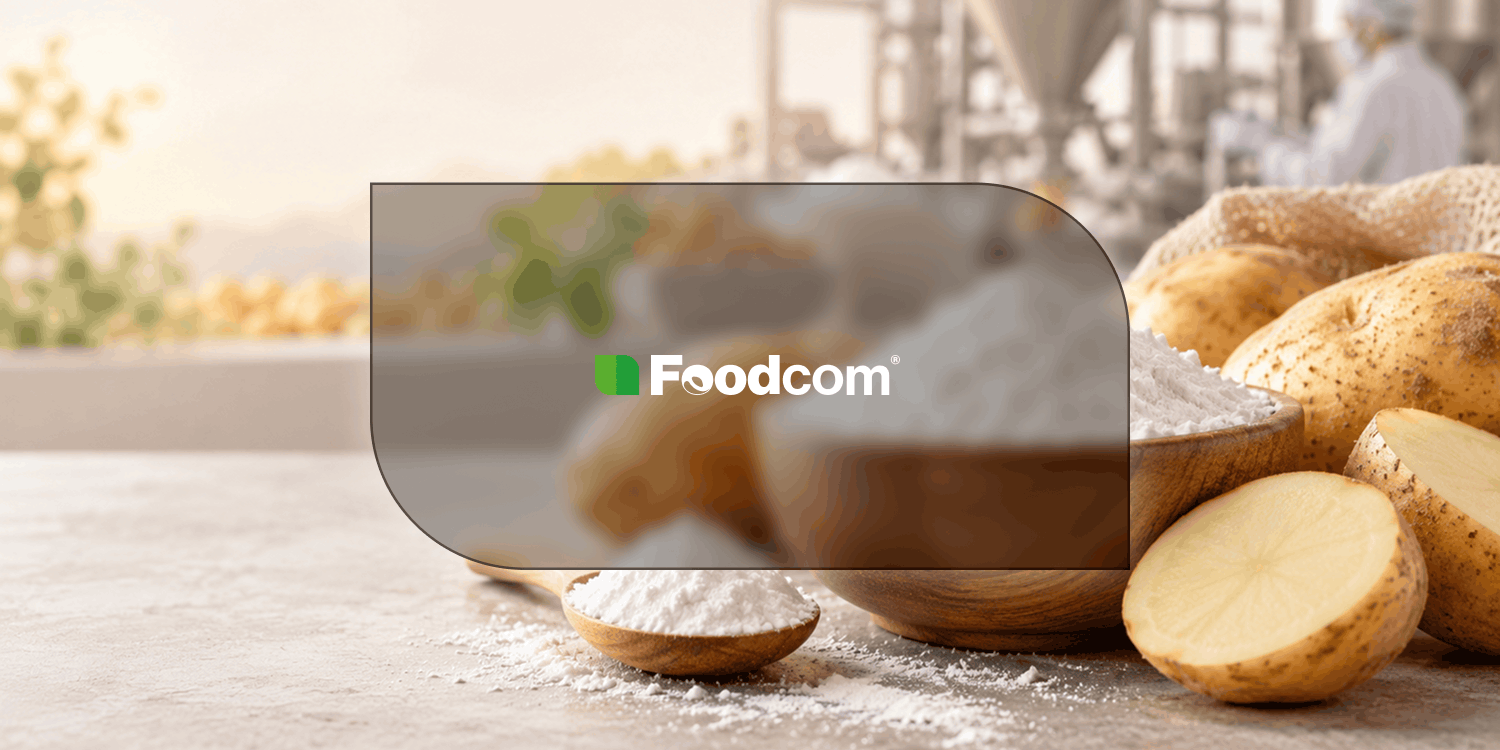
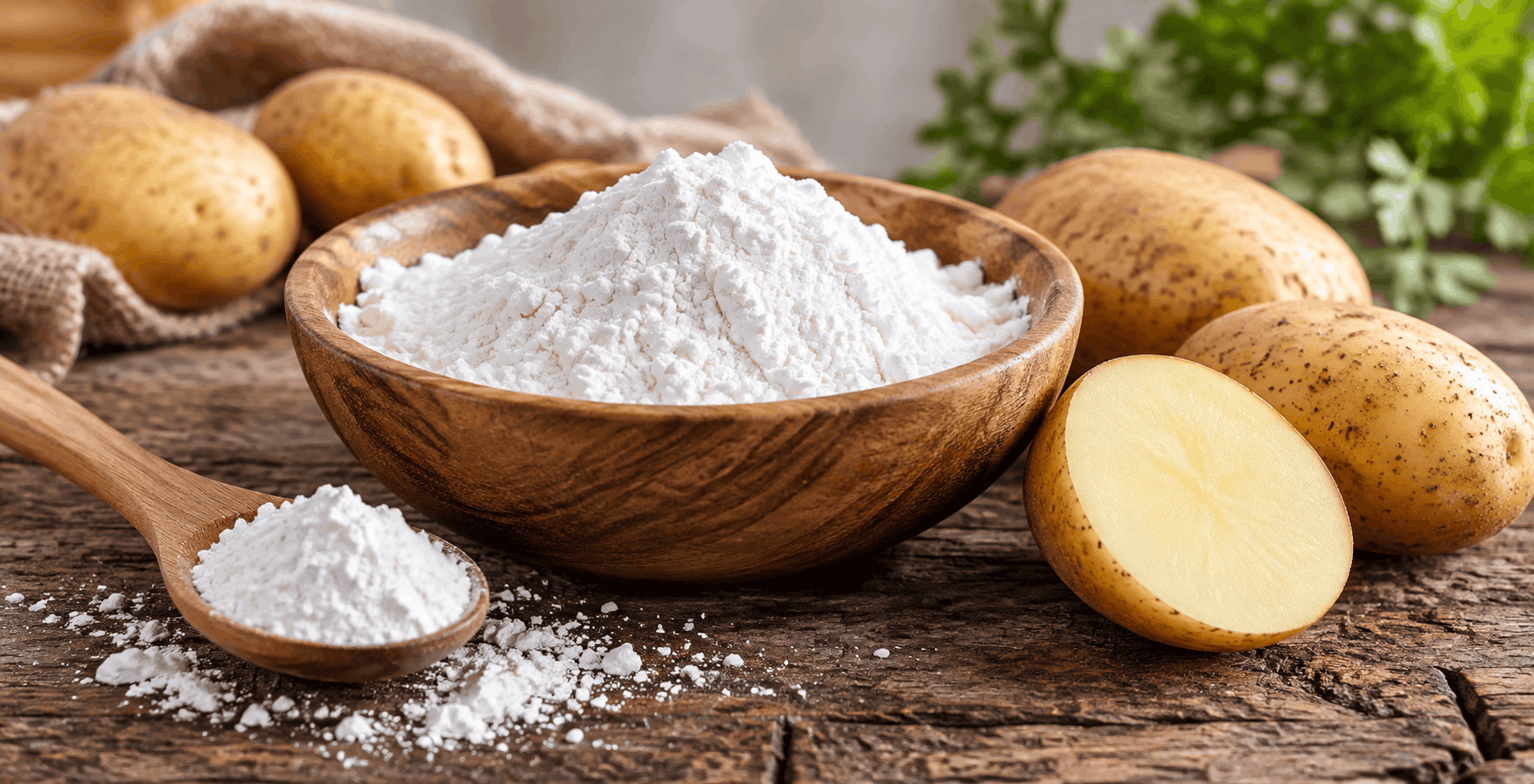
Potato starch is a natural polysaccharide extracted from potato tubers. It consists mainly of amylose and amylopectin, the proportions of which influence its behavior during heating and cooling. In its commercial form, it appears as a fine, white powder with a neutral taste and odor.
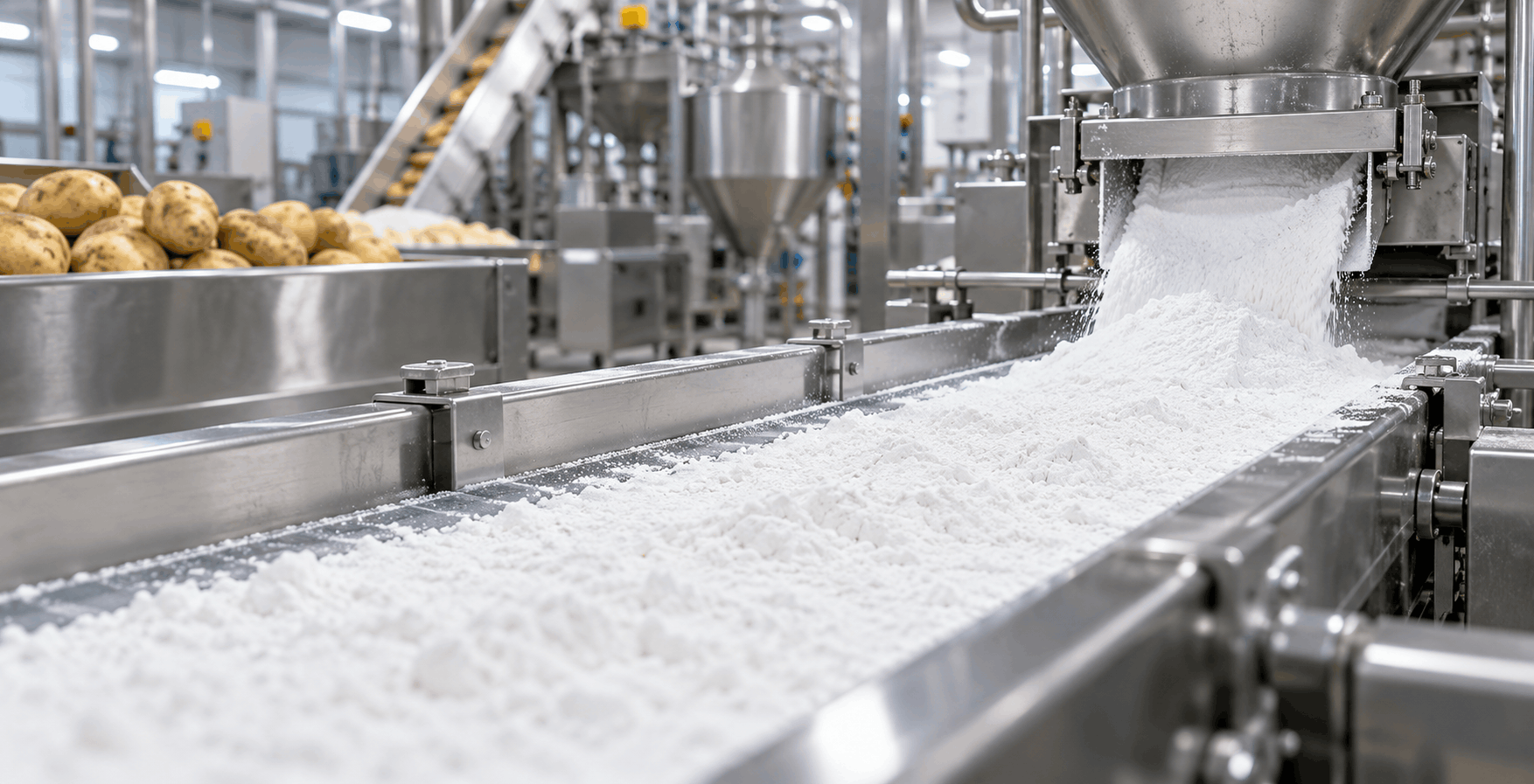
Production begins with washing and grinding the potatoes. The starch granules released from the plant cells are separated from the fibers, cell sap, and other components. The starch is then rinsed, dewatered, and dried until it reaches the desired moisture content and purity.
This process produces native starch, which retains the natural structure of the granules. Modified starches undergo additional processing to alter their technological properties, such as increasing their resistance to heat, vigorous mixing, or changes in pH.
The availability of raw material depends on the quality and size of the harvest. The potato market is influenced by weather conditions, cultivation costs, and storage capacity for tubers. Changes in the supply of starch potatoes can therefore affect the production costs of the finished starch.
What are the properties of potato starch?
Potato starch can serve several functions in the same recipe. It thickens products, binds water, and affects their structure. However, its behavior depends on temperature, concentration, and the presence of other ingredients, such as sugar or acids.
Thickening and Water-Binding Capabilities
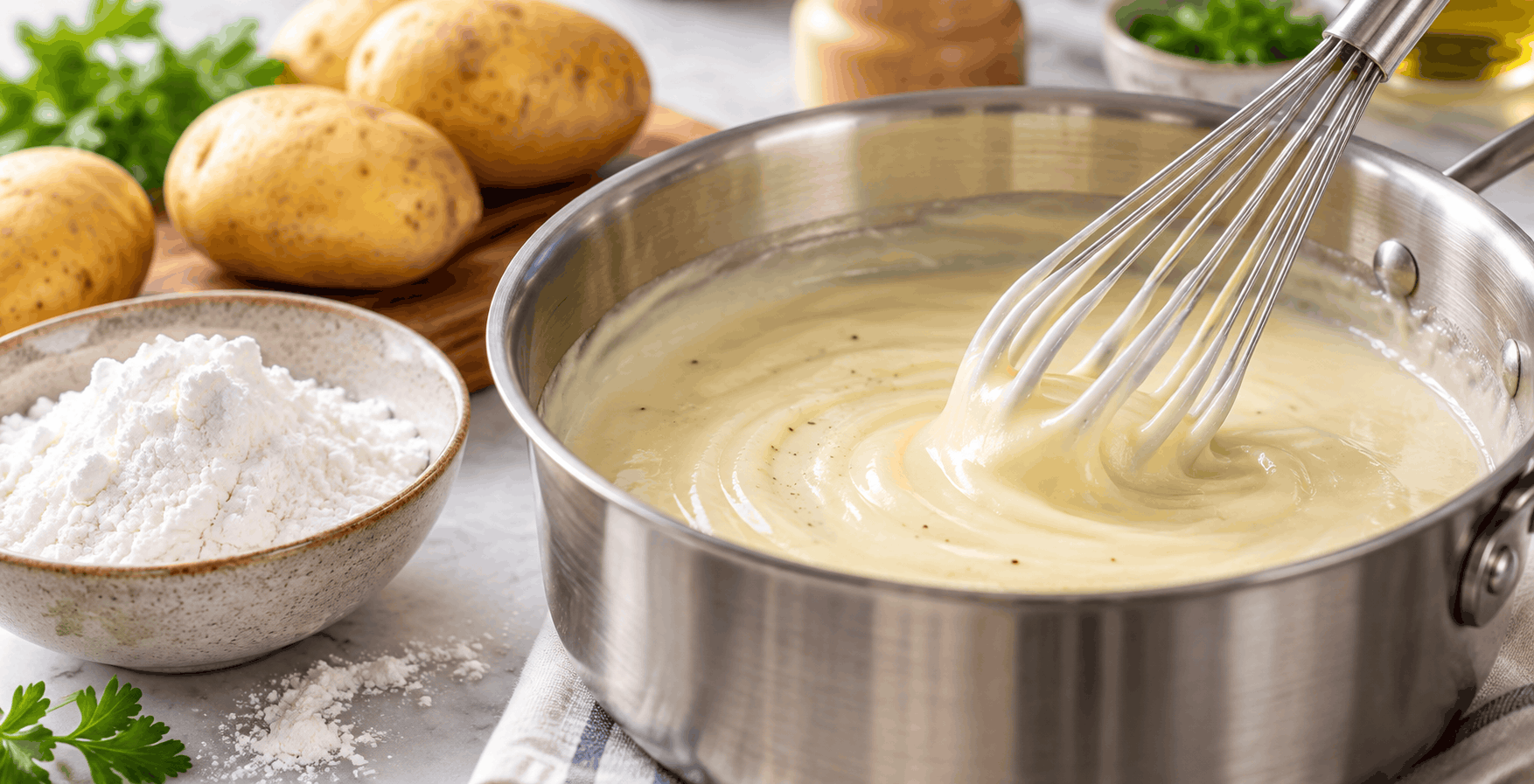
In cold water, native potato starch forms a suspension. When heated, its granules absorb water, swell, and gradually lose their original structure. This process is called gelatinization and leads to an increase in viscosity.
Thanks to this property, starch thickens soups, sauces, creams, and fillings. By adjusting its concentration and processing conditions, manufacturers can control the consistency of the finished product. However, heating for too long or vigorous stirring can lead to a decrease in viscosity.
Neutral flavor and clarity
Potato starch does not impart a strong flavor to products, which is why it works well in both sweet and savory recipes. When properly processed, it can form relatively clear pastes, which is useful in the production of sauces, desserts, and fruit fillings.
Compared to some other starches, it yields a clearer texture. However, the final appearance of the product also depends on its composition and preparation conditions.
Impact on Product Texture and Stability
Potato starch helps achieve a creamy, smooth, or firmer consistency. It can also affect the cohesiveness of the mixture and how the finished product behaves during storage.
In recipes that involve chilling, it is important to account for the possibility of starch retrogradation—that is, the rearrangement of its molecules. This process can lead to changes in texture and the release of water from the product.
Potato Starch vs. Corn Starch—How Do They Differ?
Both raw materials are used to thicken and shape the texture of food, but they do not always produce the same effect. Potato starch is characterized by its high swelling capacity and ability to achieve high viscosity. Corn starch, on the other hand, has different gelation properties and can form more opaque gels.
The question “potato starch vs. corn starch—how do they differ?” often comes up when developing new recipes. The choice depends on the desired consistency, processing method, and storage conditions of the finished product. Substituting one type of starch for another may require adjusting ingredient proportions or process parameters.
The Use of Potato Starch in the Food Industry
Potato starch is used in many food categories. Manufacturers primarily use it to regulate viscosity, bind water, and achieve the desired texture in finished products. Its versatility allows the same type of raw material to be used in products with completely different properties.
Sauces, soups, and instant products
In sauces, soups, puddings, and ready-to-eat meals, starch is responsible for thickening and providing a uniform consistency. When heated, it absorbs water and increases the mixture’s viscosity.
For instant products, the type of starch must be tailored to the preparation method. Native starch typically requires heating, while pregelatinized starch can be used for cold-prepared mixtures.
Baking and Gluten-Free Products
Potato starch is used in the production of bread, cookies, and baking mixes. It can affect the softness of the crumb, the crispness of baked goods, and how the dough binds water.
It is naturally gluten-free, which is why it is also used in gluten-free foods. However, it does not form the elastic structure characteristic of gluten. Manufacturers therefore combine it with other flours and texturizing agents to achieve the desired volume and texture in baked goods. When producing foods labeled as gluten-free, it is also necessary to monitor for any gluten contamination in the raw materials.
Meat and Plant-Based Products
In meat products, stuffings, and plant-based meat alternatives, potato starch helps bind water and shape the product’s structure. It can reduce moisture loss during heat treatment and improve the cohesiveness of the mixture.
In plant-based recipes, it is often combined with proteins and other texture-enhancing ingredients. Its amount must be carefully adjusted, as too much can cause unwanted stickiness or an overly soft texture.
Potato Starch in Cosmetics
Potato starch is used in cosmetics primarily for its absorbent properties. It is used in powders, mattifying cosmetics, dry shampoos, and select body care products.
It helps absorb excess sebum and moisture, as well as reduce the greasy feeling on the skin. In loose-powder products, it can improve the product’s spreadability and give it a silkier texture.
Starch is also sometimes used in creams and emulsions as an ingredient that affects the sensation during application. Its effect depends on the overall formulation and the other raw materials.
For cosmetic production, it is important to select starch that meets the quality requirements for this application. Before using the raw material, manufacturers check its purity, microbiological parameters, and technical documentation.
Other Industrial Applications of Potato Starch
In addition to food and cosmetics production, potato starch is used in the paper industry, in the production of adhesives, and in materials based on renewable raw materials.
In papermaking, starch and its derivatives help improve the strength of paper and its surface properties. Properly prepared starch formulations are also used during fiber processing.
In adhesive production, starch’s ability to form viscous mixtures when heated in water is utilized. Such solutions are used, among other things, in adhesives designed for paper, cardboard, and packaging materials.
Starch can also be used to produce derivatives for biodegradable materials. However, this requires appropriate processing, as native starch alone does not provide all the properties needed to replace traditional plastics.
Potato Starch Producers—Quality and Availability of Raw Materials
Potato starch production is concentrated primarily in regions with well-developed agriculture and potato processing industries. In Europe, major producers include Poland, Germany, the Netherlands, and France.
The quality of the finished product depends on the potato variety, the starch content in the tubers, and the production process. Producers monitor moisture content, purity, color, and gelatinization properties to ensure consistent parameters across batches.
In industrial production, differences between batches can affect the consistency of finished products and the course of the process. Customers therefore analyze technical specifications and select raw materials to meet the requirements of specific recipes.
Potato starch producers must account for fluctuations in raw material supply and processing costs. The potato starch market is closely linked to conditions in agriculture, energy prices, and demand from the food industry and other sectors. Fluctuations in these factors affect product availability and wholesale purchasing terms.
Outlook for the Potato Starch Market
Potato starch remains a widely used raw material in the food industry, and its properties allow it to be used in other sectors as well. The production of gluten-free foods, the growth of the ready-to-eat meal market, and the demand for plant-based ingredients are creating new opportunities for the use of starch and its derivatives.
At the same time, product availability depends on conditions in the potato market. Droughts, excessive rainfall, or harvest quality issues can limit the supply of raw material for processing. Energy and transportation costs, in turn, affect the profitability of production and distribution.
When planning purchases, companies analyze not only the price but also the quality of the raw material and the ability to maintain regular supplies. Consistent parameters across batches help minimize changes to recipes and facilitate production planning.
Potato Starch from Foodcom S.A.
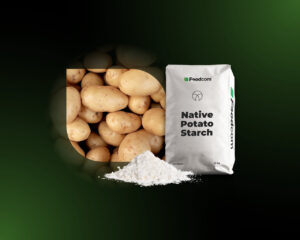
Foodcom S.A. offers native potato starch intended for use in the food industry and other manufacturing sectors. The product is available in 25-kg bags and Big Bags, allowing the delivery format to be tailored to the customer’s needs.
Foodcom S.A. supports companies in the international trade of raw materials by helping to organize the purchase and delivery of products that meet the requirements of specific industries.
Contact our team to receive our current offer, technical specifications, and detailed information about the terms of cooperation.