- Soybeans and soybean meal are rising: meal +5.4%, beans +0.9% vs the last issue, after lower US stocks and a record October crush.
- The euro fell below $1.10 (−1.7%), making US-origin soy ingredients more expensive for European buyers.
- Soy protein isolate: soybeans are plentiful, and the euro price now depends mainly on exchange rates and the non-GMO premium.
- China extended tariff relief on Canadian peas to the end of 2028, so competition for pea protein raw material in Europe is likely to persist.
In the first half of November, the soybean market rebounded from its lows at the beginning of the month. This was driven by lower U.S. inventories and record processing volumes in October. Oats rebounded from their lowest level in nine months, while prices for Canadian yellow peas remained largely unchanged. The euro weakened significantly against the dollar, so the cost of purchases from the U.S. rose. A long-awaited tariff decision was also announced: China extended the tariff exemption on Canadian peas for two years, which likely means continued competition for raw materials among European pea protein processors.
Market Overview
Soybean prices rebounded from their early-November lows. The January contract fell on November 6 to its lowest level in 11 weeks, then recovered to $12.26 per bushel on November 17. The rebound was driven by the USDA’s downward revision of its forecast for U.S. ending stocks and record October soybean processing figures reported by NOPA. December soybean meal rose 5% during this period, to $335 per short ton. Oats rebounded from a nine-month low recorded on November 6, while quotes for Canadian yellow peas remained largely unchanged. The euro fell below $1.10 for the first time since April 2025, which increased the cost of U.S. soybean products, while it strengthened slightly against the Canadian dollar.
Factors Affecting Prices
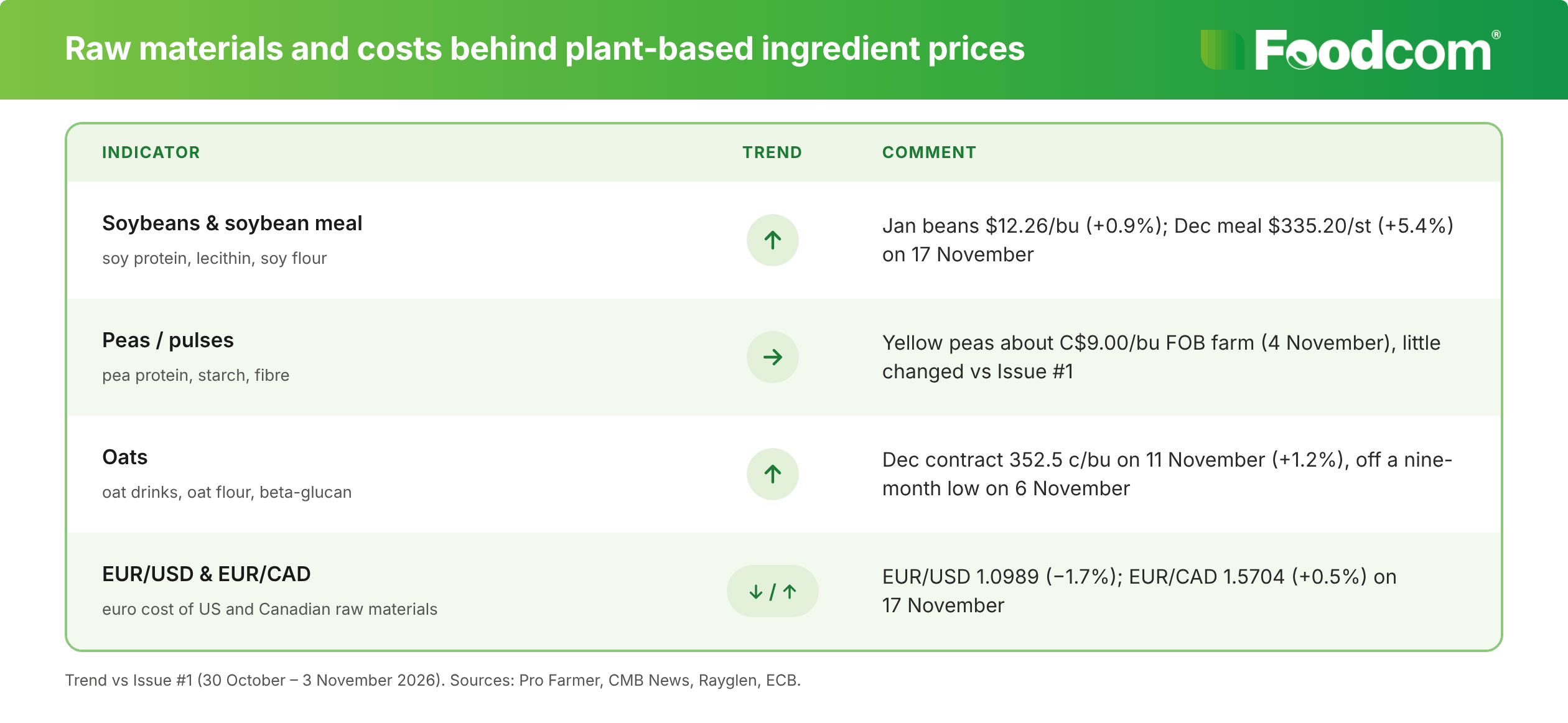
The soybean market saw the most activity. The January contract on the Chicago Board of Trade closed on November 17 at $12.26 per bushel, up 0.9% from the previous session. December soybean meal cost $335.20 per short ton, up 5.4%. Prices were driven up by lower U.S. ending stocks in the USDA’s November report—reduced by 15 million bushels to 300 million—and record processing in October: according to NOPA, 234 million bushels were processed. However, supply remains high. The USDA raised its U.S. harvest forecast to 4.57 billion bushels, Conab maintained its forecast for Brazil at 181.6 million metric tons, and China’s soybean imports in October were the lowest for that month since 2023.
On November 11, the December oat contract was trading at 352.5 cents per bushel, up 1.2% from the previous session, after falling on November 6 to a nine-month low. Offers for Canadian yellow peas remained around 9.00 CAD per bushel, farm-gate, in early November, slightly lower than in the previous report. The euro weakened by 1.7% against the U.S. dollar (to 1.0989) since the previous issue and strengthened by 0.5% against the Canadian dollar (to 1.5704).
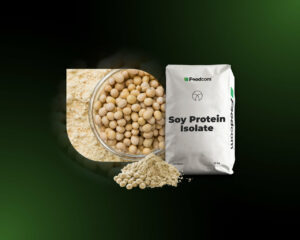
Product in the Spotlight: Soy Protein Isolate
Changes in costs on the soy protein isolate market are most evident during this period, though they point in two directions. There is no shortage of the raw material. The USDA raised its forecast for the U.S. soybean harvest to 4.57 billion bushels, Conab maintained its forecast for Brazil at 181.6 million metric tons; in October, NOPA reported a record processing volume of 234 million bushels; and Chinese imports that month were the lowest since 2023. Nevertheless, prices rebounded on the back of lower U.S. inventories, and the euro’s drop below $1.10 over the course of two weeks raised the cost of dollar-denominated offers by approximately 1.7%. For European buyers of isolate and concentrate, therefore, the limiting factor does not appear to be the raw material itself, but rather the exchange rate and the premium for non-GMO soybeans. Therefore, for contracts for the first quarter of 2027, setting volumes in euros may be more important than trying to time the soybean market.
Industry News
- China extends tariff relief on Canadian peas through the end of 2028. The suspension of the 100% tariff on Canadian peas and canola meal, which was set to expire on December 31, has been extended by two years. From March through September, Canada shipped over 975,000 metric tons of peas to China. Canadian yellow peas are therefore likely to continue flowing into China, and European pea protein processors can expect ongoing competition for raw materials.
- Lantmännen is launching a pea protein isolate on the Swedish market. The NordPea isolate, developed in collaboration with Ingredion, is making its debut at the Fi Europe trade show in Frankfurt. The plant in Lidköping, valued at 100 million EUR, is set to begin operations in the first half of 2027 and will have an annual processing capacity of 40,000 metric tons of peas and field beans. The new EU-sourced isolate is entering the market at a time when anti-dumping duties of 40.5–67.1% on Chinese pea protein are reshaping European supply chains.
- October soybean imports into China were the lowest for that month since 2023. According to customs data, they totaled 7.35 million metric tons, down 22.5% from a year earlier. This was driven by high inventories at processing plants and negative margins, while tariffs continue to keep most shipments from the U.S. out of reach for Chinese buyers. Weaker demand from processors in China is likely to limit price increases for soybeans and soybean meal, even though processing in the U.S. is proceeding at a record pace.
What to Watch For
- Any announcements regarding China’s purchases of U.S. soybeans following talks between Trump and Xi at the APEC summit in Shenzhen.
- The EUR/USD exchange rate following the dollar’s rise to a 19-month high, which directly affects dollar-denominated offers.
- Final estimates for the 2026 pea and oat harvests, published by Statistics Canada.
Contact
Are you planning to purchase soy protein isolate, pea protein, or oat ingredients for the first quarter of 2027? Contact the Foodcom S.A.team.