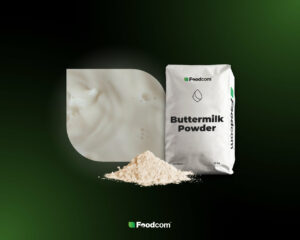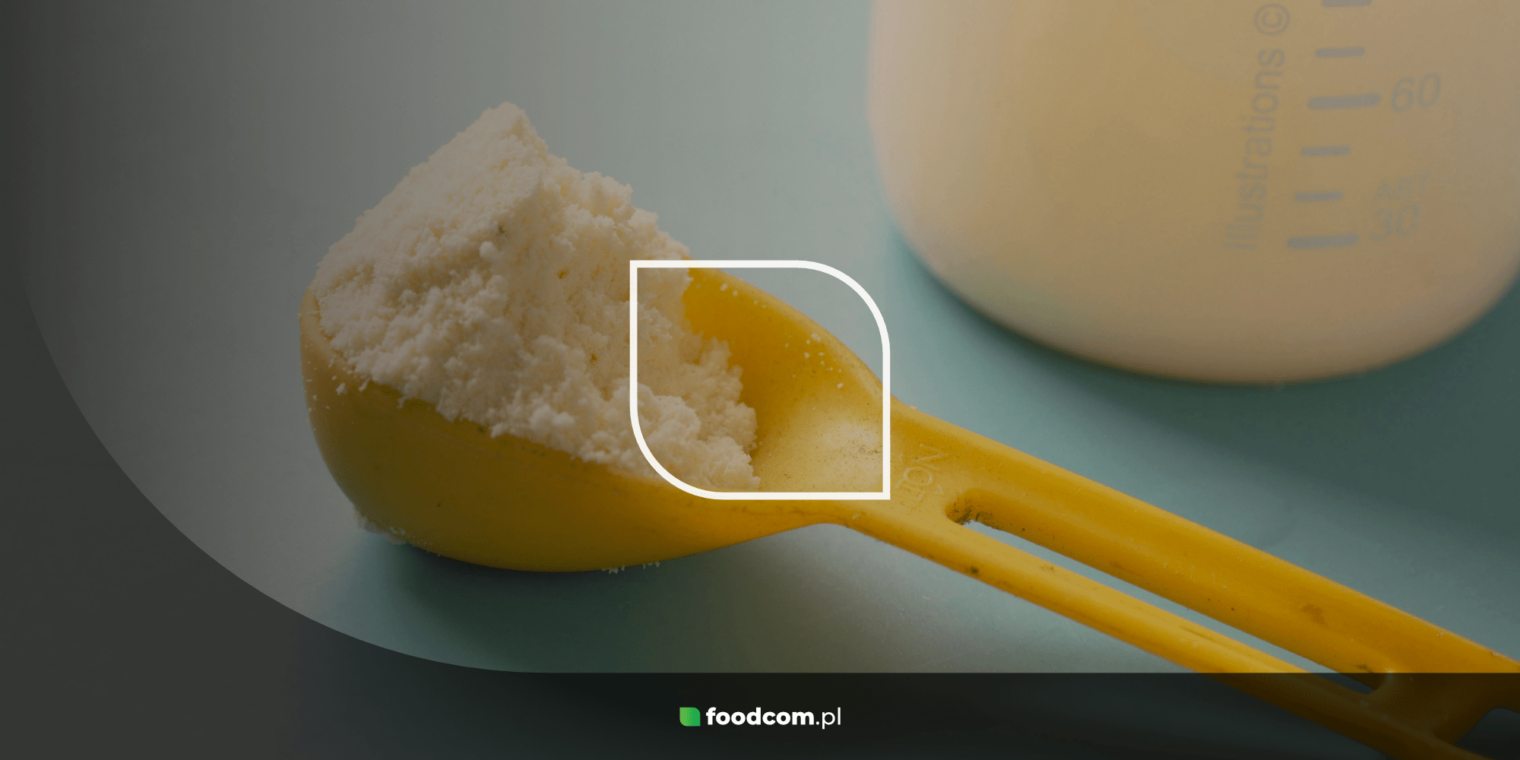
- Buttermilk powder is a dairy ingredient obtained by drying liquid buttermilk; it is characterized by a long shelf life, convenient storage, and easy dosing.
- This ingredient contains milk proteins, lactose, minerals, and a small amount of fat, and its properties help improve the texture, creaminess, and stability of finished products.
- Powdered buttermilk is widely used in baking, confectionery, ice cream production, ready-to-eat meals, sauces, instant soups, and food mixes.
- Thanks to its good solubility, emulsifying properties, and ability to reduce logistics costs, it is a valued ingredient in modern food production processes.
Buttermilk powder is an ingredient that has been widely used in the food industry for years. Although many consumers associate it primarily with a traditional milk drink, its powdered form offers many more possibilities. Its long shelf life, convenient storage, and excellent functional properties make it a popular choice among food manufacturers worldwide. What is powdered buttermilk, what are its properties, and where is it used?
What is buttermilk powder, and how is it produced?
Powdered buttermilk is produced by evaporating water from liquid buttermilk using the spray-drying method. This process preserves its valuable nutrients and characteristic milky flavor, while also giving it a significantly longer shelf life than its liquid counterpart. It contains high-quality milk proteins, lactose, minerals, vitamins, and a small amount of fat. When the appropriate amount of water is added, it can be rehydrated; however, in practice, it is most often used as an ingredient in food formulations.
Compared to liquid buttermilk, the powder takes up less space during transport and storage, which significantly reduces logistics costs. This is precisely why it is in high demand among both food manufacturers and companies involved in the export of dairy products.

Properties of Buttermilk Powder
The product’s greatest strength lies in its properties, which translate into a wide range of applications across many industries. Powdered buttermilk is characterized by excellent solubility and high stability during storage. The proteins it contains improve the texture of finished dishes, enhance their creaminess, and help achieve the desired structure.
Additionally, the product acts as a natural emulsifier, helping to bind water-based and fat-based ingredients. This allows manufacturers to achieve a uniform product consistency without having to use large amounts of processing aids. Another significant advantage is its delicate, milky flavor, which enriches recipes without overpowering the other ingredients. Its high content of phospholipids and milk proteins means that buttermilk powder positively influences the sensory profile of many food products.
Applications in the Food Industry
The food industry remains the most important area of application for this product. The uses of buttermilk powder are extremely broad and span many market segments. In baking, it improves the structure of the dough, enhances its elasticity, and helps achieve a soft and moist crumb. At the same time, it imparts a delicate milky aroma to baked goods and extends the freshness of the finished products.
In confectionery, it is used in the production of cakes, creams, cookies, and desserts. It helps achieve the proper consistency of various mixtures, improves flavor, and increases the stability of the products. It also plays a significant role in ice cream production. The milk components it contains enhance creaminess, reduce the formation of ice crystals, and improve the product’s texture. Manufacturers of sauces, instant soups, and ready-to-eat meals use buttermilk powder as an ingredient that imparts a creamy texture and a distinctive milky flavor. It also works well in the production of seasonings, food mixes, and concentrates.
The Use of Powdered Buttermilk in Other Industries
Although the food industry remains the product’s primary market, its potential applications are much broader. Powdered buttermilk is used in the production of animal feed, where it serves as a source of easily digestible nutrients. It is also used in the production of specialized feed mixtures for young livestock.
It is also gaining increasing popularity in the dietary supplement and high-protein product industries. Its content of natural dairy ingredients makes it a valuable component in many functional formulations. The product is also used by manufacturers of exported foods, for whom shelf life, ease of transport, and quality stability during storage are of key importance.
Why do manufacturers choose buttermilk powder?
Buttermilk powder helps reduce transportation and storage costs because it does not require refrigeration and takes up significantly less space than liquid buttermilk. Additionally, it enables precise dosing of ingredients during production, which ensures recipe consistency and high-quality end products. For food manufacturers, the ability to easily integrate the product into automated production processes is also extremely important. The powdered form works perfectly in modern production lines, streamlining the entire manufacturing process.
Where can you buy buttermilk powder?
Many people wonder where to buy powdered buttermilk. It all depends on the intended use and the order size. Companies that purchase dairy products in bulk most often work with reputable distributors of dairy ingredients, who ensure stable supplies, appropriate quality documentation, and the ability to fulfill larger orders.
One such supplier is Foodcom.pl. We supply raw materials used by manufacturers across various sectors of the food industry, ensuring high quality standards and comprehensive service for business customers. For large production facilities, partnering with an experienced supplier is one of the most important elements of effective supply chain management.
Buttermilk Powder – An Indispensable Ingredient in Baking, Confectionery, and the Dairy Industry
Buttermilk powder is a versatile ingredient with a wide range of applications in modern industry. Its excellent processing properties, ease of transport, and versatility across many production segments make it one of the most frequently chosen dairy ingredients by food manufacturers. Whether used in baking, confectionery, ice cream production, ready-to-eat meals, or functional blends, it ensures high quality, process stability, and consistency in finished products.