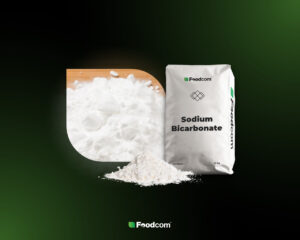

- Sodium bicarbonate is used in the food, chemical, cosmetic and pharmaceutical industries.
- It regulates pH, neutralizes acids and releases carbon dioxide, acting as a leavening agent.
- The Solvay process is the most widely used method for producing pure, consistent-quality sodium bicarbonate.
- Its low toxicity makes it suitable for water treatment and industrial gas purification.
Sodium bicarbonate, also known as baking soda (NaHCO₃), is a substance with extraordinary properties and a wide range of applications not only in our homes but also in various industries. It plays a key role in chemical production, cosmetics manufacturing, the pharmaceutical industry, and the food industry. In this article, we will examine its properties, production methods, and industrial applications.

Properties of Sodium Bicarbonate
Sodium bicarbonate, known technically as sodium hydrogen carbonate, is an inorganic compound in the bicarbonate group; chemically, it is a hydrogen salt of carbonic acid and sodium. The chemical formula of the compound is NaHCO₃, indicating the presence of sodium, carbon, hydrogen, and oxygen in the sodium bicarbonate molecule.
Bicarbonate appears as a white crystalline powder that dissolves well in water. The compound is weakly alkaline, which means that in aqueous solution it acts as a buffer, stabilizing the pH between slightly acidic and neutral. These properties make NaHCO₃ a highly valuable ingredient in many industrial processes.
Sodium bicarbonate is also distinguished by its ability to decompose upon heating. When exposed to temperatures above 50°C, it converts to sodium carbonate, releasing carbon dioxide (CO₂) and water. This reaction is crucial in many technological applications, as it gives baking soda its foaming and effervescent properties. Similarly, the reaction with acids causes them to be neutralized and results in the release of carbon dioxide and water.
Production of Sodium Bicarbonate
Sodium bicarbonate is primarily produced using the Solvay process. The bicarbonate obtained in this way is sometimes called soda ash due to the use of ammonia as an auxiliary raw material in the process. However, the main raw materials are calcium carbonate and rock salt, or sodium chloride. The process results in a precipitate of sodium bicarbonate, which is then purified, dried, and ground into the desired form.
An alternative method for producing sodium bicarbonate is the chemical reaction of caustic soda (sodium hydroxide) with carbon dioxide in an aqueous medium. This process is used less frequently, primarily in regions where access to sodium carbonate is limited.
Foodcom S.A., a leader in the chemical raw materials market, supplies high-quality sodium bicarbonate that meets all strict industry standards.
Industrial Uses of Sodium Bicarbonate
The widespread industrial use of sodium bicarbonate is due to its unique chemical and physical properties. Here are the most important areas in which sodium bicarbonate plays a key role.
Food industry
In the food industry, NaHCO₃ is used as an ingredient in food additives known as texturizers, which improve the texture of products. Sodium bicarbonate is designated as an additive in the European Union under the code E500.
Sodium bicarbonate is also used to regulate the pH of food preparations, which affects the shelf life and safety of products. This compound is also an essential raw material in the production of baking powder: its ability to release carbon dioxide allows the dough to rise and produces a fluffy texture in baked goods.
Cosmetics Industry
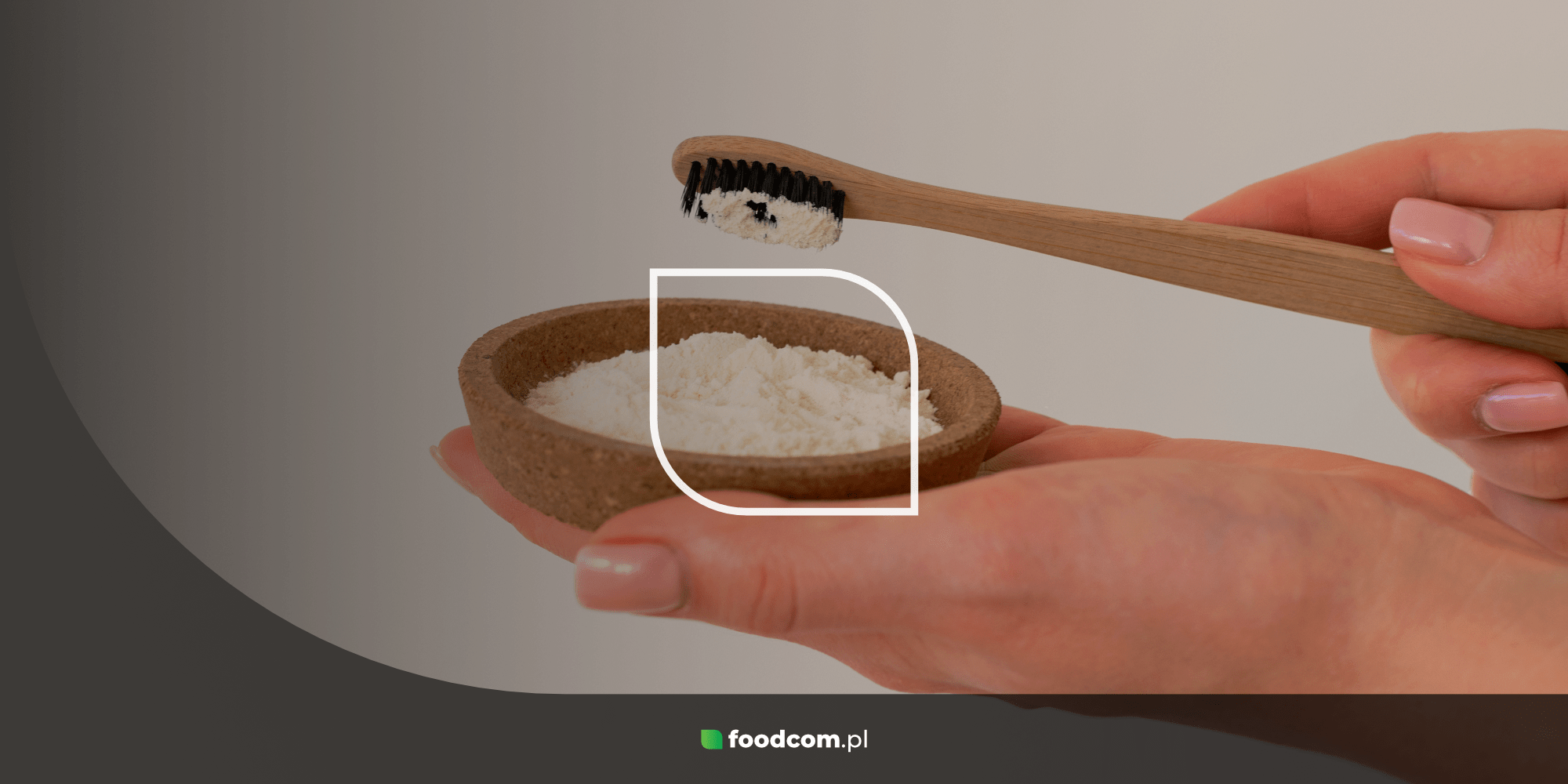
Sodium bicarbonate is widely used in cosmetics, where its cleansing and exfoliating properties are harnessed. Sodium bicarbonate is an ingredient in toothpastes and mouthwashes, where it acts as a mild abrasive to help remove plaque and stains, as well as an anti-corrosive and antiseptic. It is also found in bath products, deodorants, and face masks, helping to cleanse the skin and acting as a soothing agent.
Medicine and Pharmacy
In pharmacy, sodium bicarbonate is used as an antacid in preparations for heartburn and as an ingredient in effervescent tablets. Its buffering properties also allow it to stabilize the pH of other medications, which is crucial for their efficacy and safety. Sodium bicarbonate is also used in topical anesthetics and in mouthwashes and throat rinses, as it has a disinfecting effect and reduces inflammation.
In addition, sodium bicarbonate in the form of an intravenous solution is used to treat certain types of poisoning (e.g., methyl alcohol, tricyclic antidepressants) and hypercalcemia. Sodium bicarbonate is also found as an ingredient in sports supplements to improve muscle endurance and performance during short-duration, high-intensity activities.
Chemical Industry
Sodium bicarbonate is commonly used in chemical processes as an acid neutralizer and a source of carbon dioxide. It is an ingredient in many chemical synthesis reactions, particularly in the production of dyes, detergents, and polymers.
Environmental Protection
Thanks to its low toxicity and biodegradability, sodium bicarbonate is also used in wastewater treatment processes, as well as in the treatment of industrial water and gases. The compound is also used in industrial flue gas purification systems, where it effectively neutralizes acids such as sulfur dioxide (SO₂) and hydrogen chloride (HCl).
Other Applications
Sodium bicarbonate is also used in the manufacture of ceramic and refractory materials, where it acts as a flux, lowering the melting point of the raw materials. This saves energy and improves the properties of the final products.
Sodium bicarbonate is also used in the manufacture of some fireworks, certain types of fire extinguishers, as well as mild cleaners, disinfectants, and odor eliminators, such as air fresheners. In these types of products, sodium bicarbonate acts as an active ingredient to raise the pH and enhance the product’s performance.
Sodium bicarbonate can have a negative effect on fungal growth, which is why it is sometimes used in agriculture. In livestock farming, the compound is used as a dietary supplement for livestock, primarily as a buffering agent for ruminants.
Sodium bicarbonate (NaHCO₃) is a highly versatile chemical compound used in many industries. Its physicochemical properties—such as its ability to regulate pH, neutralize acids, or generate gases—make it an indispensable ingredient in the food, chemical, cosmetic, and pharmaceutical industries.