- Milk production in the EU is expected to increase by 1.8% in 2026; however, greater availability of raw milk does not automatically mean an increase in sodium caseinate production.
- Exports of casein and caseinates from the EU rose by 20.3% over the twelve months ending in August 2026, reaching approximately 101,000 metric tons.
- In the second quarter of 2026, sodium caseinate price indices fell in Germany and the U.S., while they remained relatively stable in China.
- The outlook for 2027 depends primarily on the availability of acid casein, processing costs, and demand for specialty milk proteins.
The end of 2026 brings a mixed picture for the global sodium caseinate market. Increased milk production has improved the availability of dairy raw materials in Europe, but has not determined the direction of prices for finished protein products. In the second quarter, some markets saw declines in sodium caseinate price indices, while prices remained relatively stable in other regions.
At the same time, exports of European casein and its derivatives increased. Over the twelve months leading up to August 2026, shipments outside the European Union rose by more than 20%. The increase in trade activity coincided with changes in milk supply and processing costs, creating varied conditions for sodium caseinate producers.
Global Analysis of the Sodium Caseinate Market
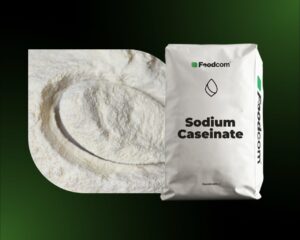
Sodium caseinate is a functional milk protein obtained by neutralizing acid casein, most commonly using sodium hydroxide. It is characterized by good solubility and emulsifying properties, thanks to which it is used in the production of beverages, desserts, processed foods, and nutritional products.
Its market is linked to the dairy sector but does not follow exactly the same trends as the milk market. Production requires an adequate supply of acid casein, specialized processing, and stable demand for the finished ingredient.
Increased milk production has changed the raw material situation
According to the European Commission’s fall forecast, milk production in the European Union is expected to be 1.8% higher in 2026 than in 2025. Greater availability of raw materials has made it possible to increase production of certain dairy products. For butter and skim milk powder, the Commission forecasts a year-over-year increase of approximately 7.5%.
However, higher milk supplies do not automatically translate into increased production of sodium caseinate. Its primary raw material is acid casein, the production of which is one of the possible uses for milk protein.
Processing plants make decisions regarding their production mix based on the profitability of individual products, available production capacity, and orders. Additional milk volumes may therefore be directed toward the production of cheese, milk powder, or other ingredients, rather than increasing the supply of acid casein.
As a result, improved milk availability creates more favorable raw material conditions but does not provide a basis for determining the scale of production growth for sodium caseinate itself.
European exports of casein and caseinates rose by over 20%
During the twelve months ending in August 2026, the European Union exported approximately 101,000 metric tons of casein and caseinates outside the common market. This represented a 20.3% increase compared to the same period the previous year. At the same time, imports from outside the EU decreased by 14.6%, to approximately 9,600 metric tons.
The United States was the largest recipient of EU exports, receiving approximately 22,000 metric tons. Mexico followed with 13,000 metric tons, and China with 10,000 metric tons. Together, they accounted for approximately 45% of EU shipments to third countries.
The statistics cover casein and its derivatives, not just sodium caseinate. Therefore, they do not indicate how the trade volume of this specific ingredient has changed. However, they do confirm the growing importance of exports within a broader group of raw materials, some of which form the basis for the production of caseinates.
Regional Analysis of the Sodium Caseinate Market
Production and trade conditions for sodium caseinate vary by region. Europe and Oceania have well-developed milk processing infrastructure; the United States is a major importer of casein and its derivatives; while in Asia, local production coexists with foreign supplies.
Data from 2026 also show that changes in raw material costs did not translate into similar price trends for the finished product everywhere.
Europe – Increased Milk Supply and Price Pressure
In the second quarter of 2026, the sodium caseinate price index in Germany declined compared to the first quarter, according to a ChemAnalyst analysis. Among the factors cited were greater milk availability and lower costs for some raw materials and energy.
In France, ChemAnalyst reported an average price of sodium caseinate at $7,900/MT on FD terms in the second quarter. This figure refers to a single market and a specific period, not an average price for all of Europe.
However, publicly available data do not allow for a clear determination of the direction of price changes for sodium caseinate itself in the third quarter. Although higher prices were also reported for the broader category of caseinates, they are not fully comparable to data pertaining exclusively to sodium caseinate.
The European market thus ended the first half of the year showing signs of easing cost pressure, but without sufficient grounds to conclude that this trend persisted throughout the third quarter.
Oceania – New Zealand as a Key Export Hub
New Zealand remains a major producer and exporter of casein and its derivatives. Its well-developed dairy industry enables the supply of specialized protein ingredients to many regions of the world.
One example is Fonterra, which, through its NZMP brand, offers sodium caseinate for food applications. Its operations also demonstrate the international nature of processing chains. Sodium Caseinate 166 is produced in the United States from casein imported from New Zealand.
New Zealand casein is also an important source of supply for the U.S. market. According to trade statistics covering casein and its derivatives, New Zealand was the largest supplier to the United States during the twelve months ending in August 2026.
However, this does not mean that all products originating from New Zealand have the same price levels or technical properties. Casein, sodium caseinate, and other derivatives operate in separate segments, and their sales terms depend on specifications and processing methods.
North America – High Imports and More Moderate Prices in the Second Quarter
The United States remains a major importer of casein and caseinates. During the twelve months ending in August 2026, imports in this category reached approximately 58,000 metric tons, which is 2.2% less than in the corresponding period of the previous year.
The largest suppliers were New Zealand, Ireland, and Denmark. Their combined share highlights the critical importance of international milk protein supply chains to the U.S. market.
According to ChemAnalyst, in the second quarter, the price index for sodium caseinate alone in the United States fell compared to the first quarter. The analysis pointed to greater milk availability and lower costs for some production inputs.
However, there is insufficient data to conclude from this decline that demand for sodium caseinate has weakened across the entire U.S. food industry. The change in the price index could have resulted from several cost and supply factors acting simultaneously.
Asia – More Stable Sodium Caseinate Prices in China
In China, the second quarter of 2026 brought relative stabilization of the sodium caseinate price index. According to ChemAnalyst, lower prices for dairy raw materials were offset by other production costs, which limited price changes for the finished ingredient.
This trend differed from the situation in Germany and the United States, where price indices fell during the same quarter. This demonstrates that changes in milk costs do not necessarily lead to identical price reactions in individual markets.
China also remains an important buyer of European casein and caseinates. During the period under review, it ranked third among destinations for EU exports in this category. However, these data do not separately indicate the volume of Chinese imports of sodium caseinate.

One of the most important factors influencing the sodium caseinate market is competition for raw materials within the dairy sector itself. Even with a large supply of milk, producers do not necessarily need to increase acid casein production if it is more profitable to use it to manufacture other products. It is precisely these decisions that may have a greater impact on the availability of sodium caseinate than the overall situation on the milk market. In 2027, much will depend on how the profitability of various processing routes changes.

What will influence sodium caseinate prices in 2026?
The price of sodium caseinate is influenced not only by the cost of acid casein but also by how it is processed. Production involves neutralization, process parameter control, and drying. Changes in energy prices, operating costs, and plant efficiency can therefore affect the price of the finished ingredient regardless of the situation on the milk market.
The origin of the raw material is also significant. Some plants use locally produced casein, while others import it from abroad. Differences in supply costs and production organization can lead to varying price conditions even when product specifications are similar.
Why do sodium caseinate offers vary in price?
The most important factors include:
- Acid casein: its cost and availability at processing plants.
- Processing: energy consumption, drying, neutralization, and production yield.
- Specifications: protein content, viscosity, solubility, and emulsifying properties.
- Origin: the place of production for the raw material and the finished ingredient.
- Logistics: shipping conditions, order size, and delivery date.
Product parameters are particularly important because sodium caseinate does not always behave identically in different formulations. Products with similar protein content may differ in viscosity and stability, which affects their application.
A case in point is NZMP’s product line. The manufacturer states that Sodium Caseinate 166 has a viscosity approximately 75% lower than that of standard Sodium Caseinate 180. This reduced viscosity is achieved through hydrolysis during production.
Such differences illustrate why two products in the same category may be intended for different applications. The price per metric ton alone is not always sufficient to assess their suitability for a specific production process.
Industrial Applications and Demand for Sodium Caseinate
Sodium caseinate is used in the food industry not only as a source of protein. Its emulsifying properties and ability to influence food structure mean that it plays an important technological role in many recipes.
It is used, among other things, in beverages, instant mixes, creamer-type products, desserts, confectionery, and processed cheeses. However, individual products require different parameters, particularly in terms of viscosity, solubility, and stability.
From Beverages to Specialty Nutritional Products
In creamer-type products, sodium caseinate helps stabilize the emulsion by limiting the separation of water and fat. In desserts and aerated products, its foaming properties are important, as they influence the structure of the finished product.
High-protein beverages present different challenges. A high protein content can make it difficult to achieve the desired consistency, so the ingredient’s viscosity and its behavior during processing are critical.
The development of products with specific technological requirements favors the use of specialized variants of sodium caseinate. However, this does not necessarily mean an increase in demand for all products in this category.
Will the growth of high-protein foods increase demand?
The growing importance of high-protein foods creates opportunities for using ingredients that combine nutritional value with technological functionality. Sodium caseinate may be particularly useful in formulations requiring good solubility and emulsion stability.
However, it competes with other milk proteins, including whey protein concentrates and isolates, as well as milk protein concentrates. Each of these ingredients has different properties, and the choice depends on the desired texture, the production process, and the formulation costs.
There is currently insufficient data to determine to what extent the growth of the high-protein food segment as a whole will translate into increased consumption of sodium caseinate itself.
Trends and Outlook for the Fourth Quarter of 2026 and 2027
As of late October 2026, the available data does not allow for a clear indication of the direction of global sodium caseinate price changes. In the second quarter, price indices in Germany and the United States fell, while in China they remained relatively stable. However, there is a lack of equally detailed, comparable data on the product itself for the third quarter.
The outlook for 2027 depends on how the availability of acid casein, processing costs, and demand for the finished ingredient evolve.
Three Possible Scenarios for 2027
1. Improved raw material availability will ease price pressure.
If increased milk supply translates into higher acid casein production, the availability of sodium caseinate may improve. A larger supply of raw material could facilitate order fulfillment and limit upward pressure on prices.
2. Processing costs will keep prices at an elevated level.
Lower raw material costs may not be sufficient to lower the prices of the finished product if the costs of energy, drying, transportation, and other stages of production remain high.
3. The development of new applications will increase demand for certain products.
New recipes for beverages and specialty foods may increase interest in sodium caseinate with specific technological parameters. However, the scale of this impact will depend on the actual number of implementations and competition from alternative protein ingredients.
In the coming quarters, a key area of development may be the continued adaptation of sodium caseinate to the requirements of modern food formulations. The ability to combine high protein content with the right texture and stability gives this ingredient applications that cannot always be achieved using other milk proteins. However, the scale of future growth will depend on how many of the new products progress from the formulation stage to regular production.